
1917 Is a Chaotic and Thrilling War-Movie Experience
Sam Mendes’s 1917 comes branded as a one-take fluid journey through the battlefield of World War I. Though there’s a narrative, a mission both of duty and personal attachment, the real draw is its visual allure—how gorgeous the picture appears. There will no doubt be some scoffing for the film offering little more than that. But for being more of a thrill ride through the terror of World War I combat than a grander contemplation on the nature of war, the film succeeds for what it sets out to be.
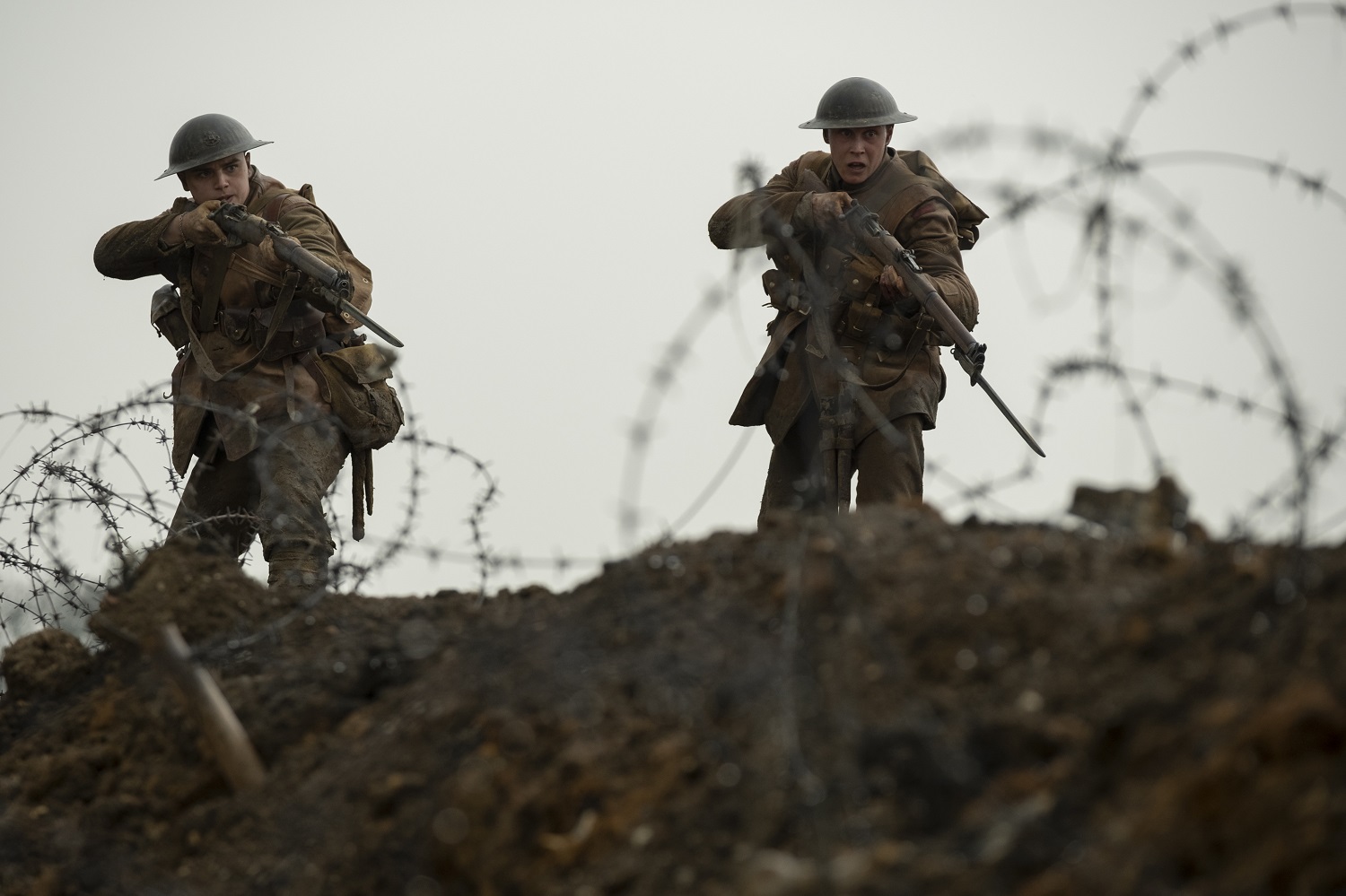
Dean-Charles Chapman and George MacKay in 1917. François Duhamel/Universal Pictures and DreamWorks Pictures
From the first shot, we follow two soldiers of the British Army on the front lines. Lance Corporals Schofield (George MacKay) and Blake (Dean-Charles Chapman) have been summoned by the higher-ups in command to deliver a message to the other side of the battlefield about a surprise German attack. It’s a timely assignment, as the advance will happen within 24 hours. One of the soldiers is merely doing his duty to save lives. The other has a brother on the front lines that he hopes to save in time, making him much more keen to progress.
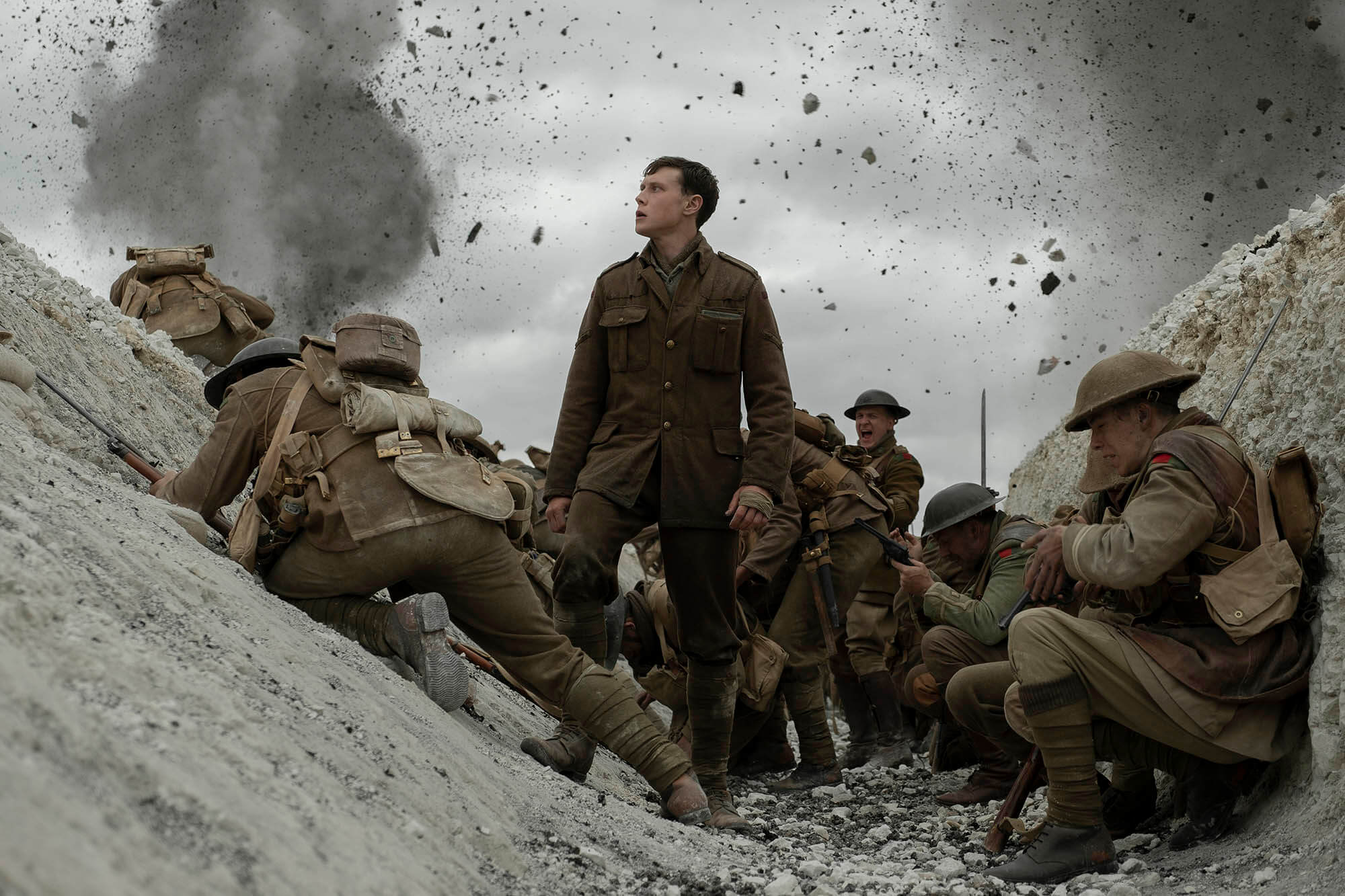
That’s really all you need to know about the story. The rest of the film is a chilling and frantic journey, and Mendes’s direction here creates an intense atmosphere. It takes about 10 minutes for the soldiers to be briefed before they hop over the trenches and are on their way, but there’s an unease leading up to that moment. The soundtrack by Thomas Newman keeps a brooding mood going, but there is also some room for breath and contemplation on the journey. Had the whole film been a nonstop ride, the theatrics would wear thin. But there are thankfully plenty of quieter moments when we’re not expecting a gunshot in the distance or a mine beneath their feet.
François Duhamel/Universal Pictures and DreamWorks Pictures
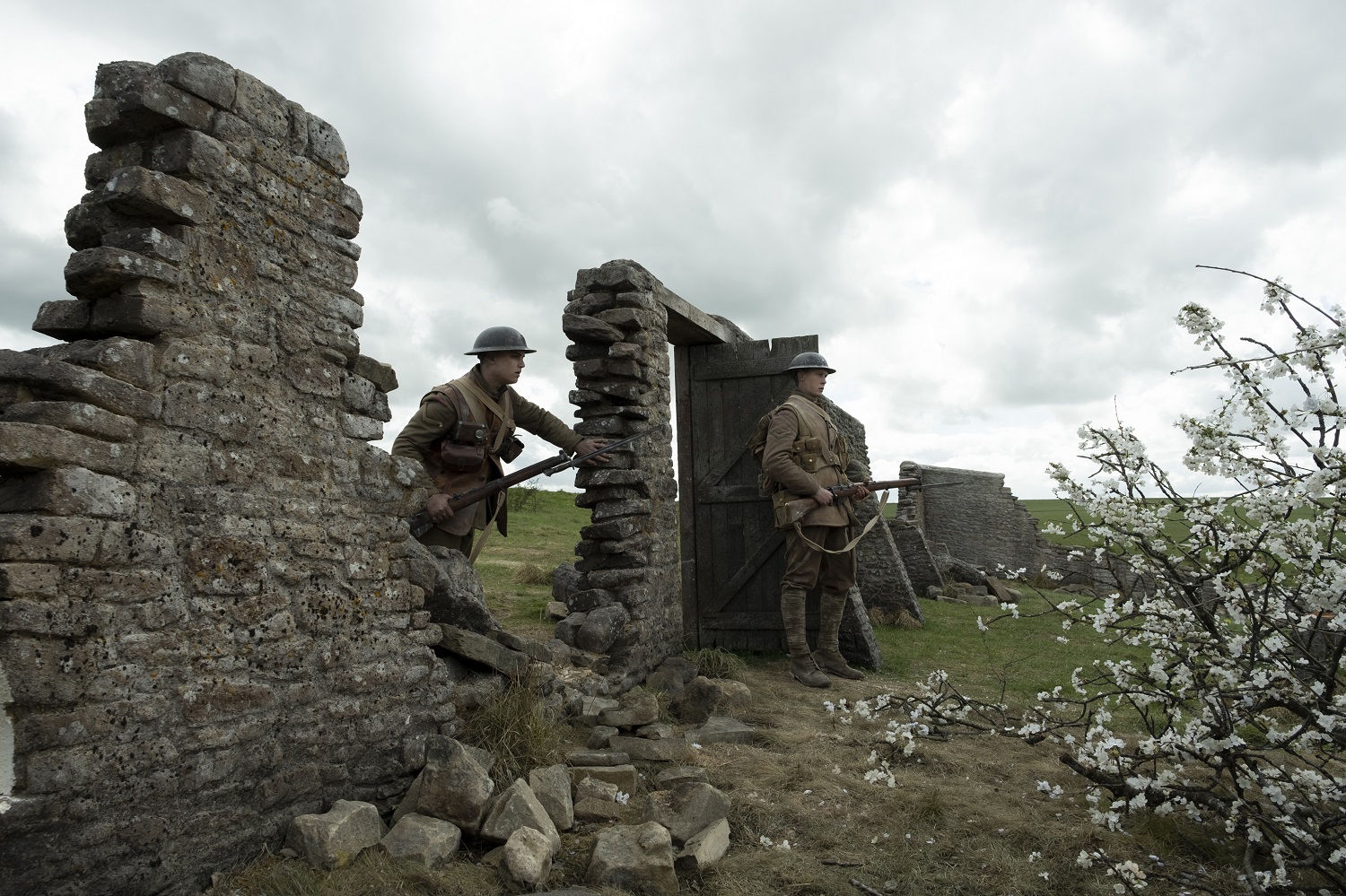
Of course, the real draw for the picture, and certainly the biggest selling point, is the fantastic cinematography by the prolific Roger Deakins. Deakins has proven his ability over the years to offer gorgeous shots within the premise of multiple one-take scenes, and 1917 is a true test of his talent. Even when stuck in the trenches, he manages to find just the right balance of blocking and lighting despite seemingly everything being in motion. The camera veers close to and away from the characters in every scene. Sometimes we’re right behind the shoulders of the two soldiers, and other times we’re looking at them from a distance, wading through water and corpses trying to keep up.
There’s a remarkable draw for a picture that presents so many detailed set pieces and yet manages to astound in its seamless transitioning. The one moment that truly amazed me wasn’t the chaotic dogfight or the midnight rush through a burning town but a scene in which we follow the soldiers into a truck. It’s a break from the action and a chance for some mild back-and-forth to get a feel for the era. But look where the camera is during these scenes! We are placed literally on the shoulder of one of the soldiers to catch a glimpse of our protagonist. There’s a certain marvel in an action picture that can get this close in the more intimate moments and then pull back with large showcases, as in the climax with its many soldiers running into battle as our heroes charge through men and explosions in their quest to deliver the message.
François Duhamel/Universal Pictures and DreamWorks Pictures
Aside from some sufficient cameos from the likes of Colin Firth, Mark Strong, and Benedict Cumberbatch, the real stars of this film are Mendes and Deakins. They dazzle the eye by portraying a terrifying, somber, and nerve-wracking adventure that could most certainly draw comparisons to a video game or a movie like Mad Max: Fury Road for similar cinema criticisms. But though the film settles for some familiar war-movie clichés, it ultimately satisfies through its towering strength of placing the audience in the action. It’s worth pairing with last year’s World War I documentary They Shall Not Grow Old, which restored footage of the era and supplemented it with stories told of that time. Both films try to place us in that time to make history come alive, and 1917 certainly breathes the most humanity and terror into its theatrical presentation of war.
Follow @TwinCitiesGeeks on Twitter or Like Twin Cities Geek on Facebook for more great stuff from Minnesota geeks in your feed!
About the Author

Mark McPherson
Mark is a moonlighting movie critic for various websites. A video-store veteran and lover of the medium, he is up for watching just about any movie (yes, including that one).


