
To the Ends of the Earth Shines an Empathetic Light on a Divided World
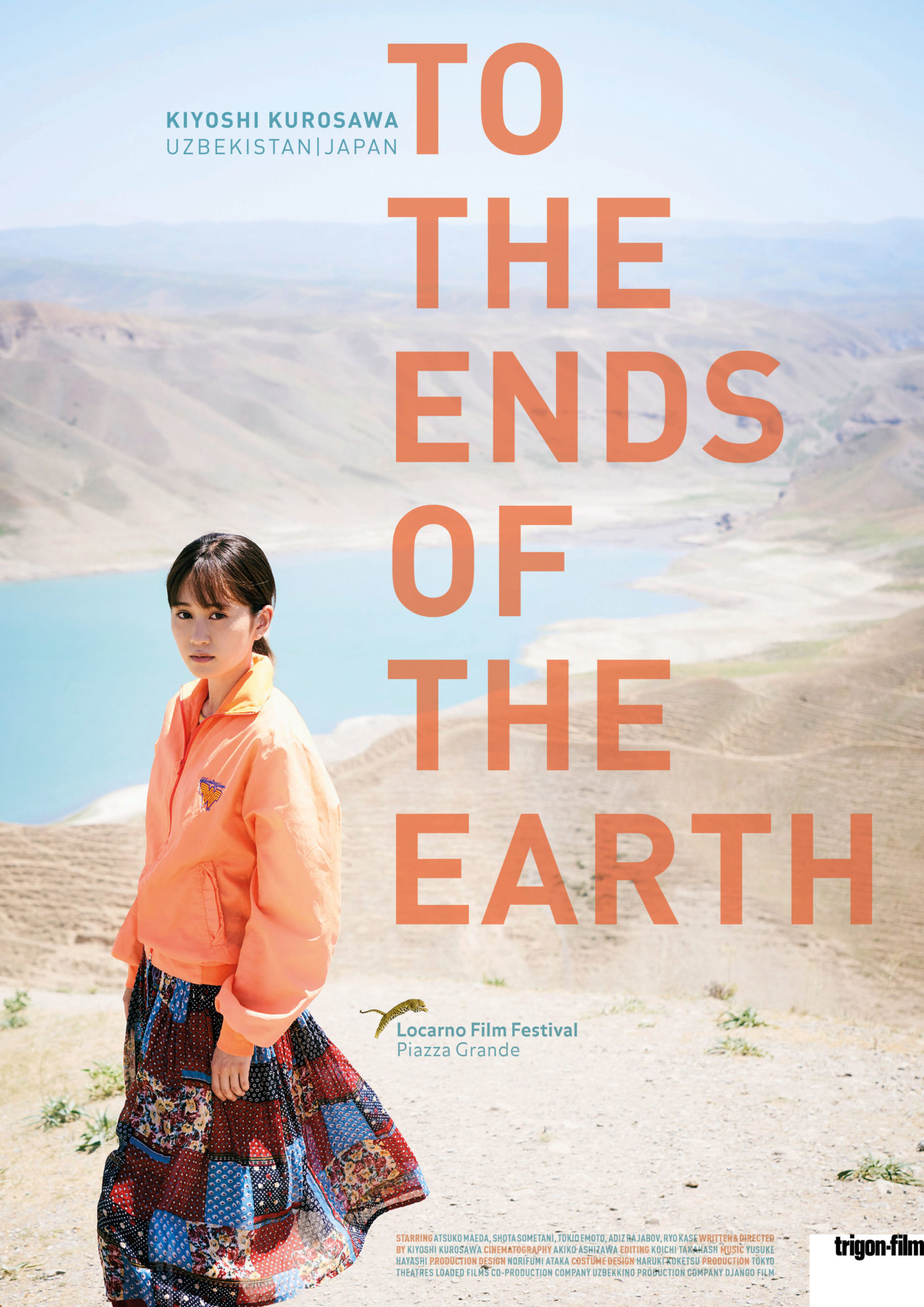
Anyone who has worked on a film set, whether as a director, actor, or PA, will have plenty of reason to cringe during the first 30 minutes of To the Ends of the Earth (Tabi no Owari Sekai no Hajimari). It’s not that the shoot depicted is especially bad. Some types of things just happen when you’re trying to make order out of reality’s chaos, and perhaps when people get so involved with their goals that they stop listening. The team wants a shot of Yoko (Atsuko Maeda), their reporter, catching an elusive two-foot-long fish from a lake, but the fish aren’t biting. They move to a restaurant hoping for more luck, only the cook isn’t ready for them. The best she can do on short notice is uncooked rice, which Yoko must eat on screen, smiling and exclaiming how delicious it is.
KimStim
The director (Shota Sometani) and crew (Ryo Case, Tokio Emoto) are lost in the camera, talking lighting and framing, ignoring Yoko until they expect her to take her position and deliver her lines perfectly. On the first day of shooting, the crew leaves early to set up without warning their star; Yoko comes outside to find their van gone. They’ve left someone to pick her up, but she’s never met him and he doesn’t speak Japanese, so she wonders whether she’s just being stalked. Oh, and they are also shooting in Uzbekistan, a country Yoko has never been to and whose language she does not speak.
This is not really a film about filmmaking. To the Ends of the Earth, written and directed by Kiyoshi Kurosawa and screening online now as part of the Minneapolis St. Paul International Film Festival, is about the barriers between people. On her first night in this new country, Yoko boldly ventures to find her supper at a local bazaar. After hours of struggling to navigate the bus or speak to any of the vendors, she ends up getting junk food from a convenience store. Sometimes when strangers address her, she just runs in the opposite direction to avoid struggling through an awkward interaction.
It’s not merely culture shock—Yoko goes to great lengths to avoid conflict with her fellow crewmembers. She fidgets and deflects when the translator (Adiz Radjabov) asks her about her life or the cinematographer invites her to share a table at a continental breakfast. During one grueling but hilarious scene, she endures the same horrifying amusement park ride again and again, her body rocked and jostled in ways that probably aren’t up to code. She screams. She cries. She looks to be on the verge of vomiting. And that’s just after the first go. But when the director asks whether she’s good for another take, she just nods in assent.
She does it three more times.
They should be paying better attention, but she also won’t push the point. When it’s all over she crawls to a garbage can, vomits, wipes herself off, then walks back into frame full of life and energy to describe how much fun the ride was. It’s not just professionalism; it’s her strategy for dealing with everyone, and she can get away with it because, as she shows with each take, she’s perfected her performance. The only person she opens up to at all is her boyfriend, who she texts once in the privacy of her hotel room. She won’t even call him. She tells him she’s okay, that she’s fine, that today went well. She doesn’t seem to feel she’s allowed to verbalize the tension inside her to anyone.
The movie is grounded totally in reality with two exceptions: twice, spurred on by events outside her control, Yoko rises to a stage, looks at the camera, and sings her heart’s song. It’s beautiful. And then it’s undercut by some perceived threat—a security guard asks how she got into the auditorium—driving her out the door and back into her shell. What would it take for someone so tightly wound to allow themselves this kind of freedom in the presence of others? How do any of us begin tearing down barriers with people who don’t share our language, literally or metaphorically?
What a perfect topic for a film shot in Central Asia by filmmakers from an island in the Pacific, screening for a festival in the midwestern United States with other films from all over the world. This just feels like a film for its time, as we all look for new strategies to connect with one another and struggle together against a challenge that knows no borders.
I’ve been a fan of Kiyoshi Kurosawa since Pulse, one of the strangest, sweetest horror films I’ve ever seen. That film and this one would seem very different on the surface—one is about a woman shooting documentary content, another is about ghosts on the internet—but they share a sensitivity to the smaller emotions that bigger, more plot-driven movies steamroll over. There’s a patience required to pull this off. It’s not immediately apparent what the film is about or where it’s headed. Kurosawa risks throwing his audience into an unfamiliar situation in the hopes that they will draw their own conclusions and read between the lines.
There are immense rewards to this approach when it’s done well. Take Yoko, for instance. She’s a loner but feels deeply for others. She’s shy but has a magnetic personality on camera. She senses threats but keeps pushing herself into unfamiliar situations. She’s complicated like a real person, so through her an audience of real people can see the ways they are flawed and also through her can believe it’s possible to do better. If the film rushed to define her without demanding we do some of the work, we couldn’t relate to or learn from her nearly as much.
That’s the ultimate gift of To the Ends of the Earth. It’s willing to risk confusion and discomfort in order to make an honest connection, and it humbly suggests we do likewise.
To the Ends of the Earth is screening online for Minnesota residents, along with 49 other films, through May 23, 2020.
Follow @TwinCitiesGeeks on Twitter or Like Twin Cities Geek on Facebook for more great stuff from Minnesota geeks in your feed!
About the Author

Ryan Sanderson
Ryan is a carbon-based life form in the Sol system of the Milky Way galaxy. He likes Chinese food and Coen brothers movies.


