
An Accident of Stars Is a Deliberately Crafted Fantasy Delight

Angry Robot Books
If you, like me, miss the way you enjoyed fantasy books as a kid but have been having trouble finding a book with a plot, worldbuilding, and representation that meet your standards now that you’re a more aware and more discerning adult, put Hugo Award–winning Australian author Foz Meadows on your radar. An Accident of Stars, the first book in Meadows’s Manifold Worlds duology, is a portal fantasy in which a 16-year-old Australian girl named Saffron follows a British-born worldwalker named Gwen through a hole in reality to a different world, landing in a country on the brink of civil war (a state of affairs owing in part to political mistakes Gwen has made). As the impeccably paced plot progresses, Saffron finds herself in the middle of an unofficial, border-crossing, last-ditch effort to restore peace—an effort that faces near-impossible odds and ever-shifting political dynamics.
An Accident of Stars is quite simply a fantasy novel done well by all the standard metrics. The magic feels real in a number of ways; for one thing, it takes a physical toll on its users to the point that one character deals with something resembling chronic fatigue because of the way her magic drains her, but trying to avoid using magic has its own consequences. For another thing, when Saffron arrives in the land of Kena, she doesn’t understand the language, and the magic by which she learns to speak Kenan doesn’t shove an entire language into her brain all at once—it merely speeds up the language-learning process, and some words and concepts fail to translate.
The politics also feel more real than in almost any fantasy narrative I’ve ever encountered. There are no perfect options, and although some people are more morally upright than others, there is no singular “good guy” with completely pure motives who can and will save the world. Instead, there are strange and unenthusiastic alliances among various forces who oppose the current ruler of Kena for disparate reasons and have different ideas about how power should be apportioned once the current ruler is gone. Some of these people are grumpy; most are selfish, in various ways and to varying degrees; some are ruthless. As a reader, I was on their side, but I could also see how flawed they were and how removing the current ruler could create just as many problems as it would solve.
In addition to checking all the boxes fantasy books have traditionally been asked to check, An Accident of Stars is unapologetically feminist. The vast majority of the important characters in the book are female—women and girls of a range of ages, from 11 to mid-80s. Not only are women the focus of the story, but Kena seems to be a country of complete gender equality, and neighboring Veksh is matriarchal. At one point, Saffron is trying to determine whether she will be safe with a male character who’s been tasked with teaching her to speak Vekshi, and the person she’s asking is deeply confused by Saffron’s question, because, while sexual violence exists in this world, it’s rare and swiftly punished; rape culture does not thrive in Kena.
An Accident of Stars is intersectional as well, having one of the most diverse casts I’ve ever seen in a fantasy novel, with various races and identities within the LGBT community represented. Kenans are described as brown-skinned, while residents of Veksh are pale; Saffron, who is white, is frequently thought to be Vekshi, while Gwen, who is Black, tends to be mistaken for a resident of Uyun, another neighboring country. Other than Saffron and Gwen, the cast is a mix of Kenans and Vekshi expatriates, and the book has multiple nonwhite point-of-view characters. Though it doesn’t play a large role in the story, Saffron does spend some time on the page recognizing and trying to combat her own racism when it comes to the way she views the Kenans she meets, and Gwen cites racism she experienced in Britain as a reason she decided to live in Kena instead. Meanwhile, Saffron is bisexual, Gwen is aromantic (though not asexual), and a minor character is trans—and none of these identities are stigmatized in Kena. Marriages in this world tend to be polyamorous (not polygamous), and the gender of the partners involved is socially irrelevant, which winds up meaning that sexual orientation is not a significant topic of discussion. As a queer reader, I appreciated the book as an escape to a world without homophobia, and I also appreciated that the presence of characters from Earth means that we get to see Saffron struggling with her orientation internally despite suddenly being in a world where it is a nonissue.
Meadows proves that writing a good plot and writing good representation can go hand in hand. I didn’t read An Accident of Stars primarily for the empowered female characters, the complex characters of color, or the stigma-free queerness; those were cherries on top of an excellently plotted sundae, and I read the book mostly because I couldn’t put it down. Go in aware that it doesn’t shy away from violence and can get gory at times, but if you can stomach some graphic scenes, definitely read it. It’s quite simply one of the best-executed pieces of fiction I’ve read in a long time.
An Accident of Stars was published in 2016 and is available where books are sold.
Follow @TwinCitiesGeeks on Twitter or Like Twin Cities Geek on Facebook for more great stuff from Minnesota geeks in your feed!
About the Author
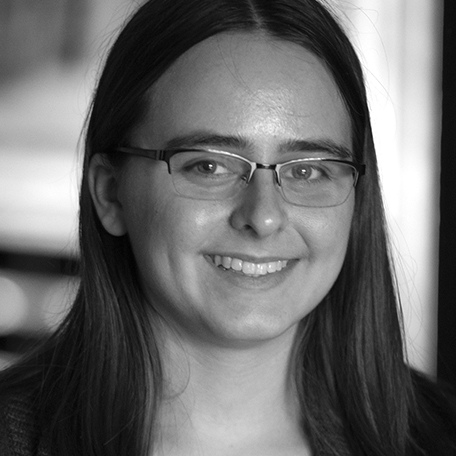
Linnea Peterson
Linnea is a communications professional and aspiring novelist living in Minneapolis. They graduated from Luther College in Decorah, Iowa, where they studied economics, writing, and math. They love musicals, the Swedish language, and fanfiction.


