
What Does NASA’s New Discovery of Water on the Moon Mean?
Last week, after hinting at an “exciting new discovery about the Moon,” NASA revealed new evidence proving the existence of what seems to be theoretically drinkable water on the lunar surface.
Confirmed by the Stratospheric Observatory for Infrared Astronomy (SOFIA) and published in the latest issue of Nature Astronomy, the discovery concludes the existence of water molecules in a region in the Moon’s southern hemisphere—specifically in a spot referred to as the Clavius Crater, one of the largest crater formations on the moon.
This news builds on years of previous research that has been specifically tracking the possibility of locating water on the moon: “Prior to the SOFIA observations, we knew there was some kind of hydration, but we didn’t know how much, if any, was actually water molecules—like we drink every day—or something more like drain cleaner,” Casey Honniball, the lead author on the paper, explained in a NASA press release.
While the actual amount of water that was detected is relatively minuscule, subsisting in “concentrations of 100 to 412 parts per million—roughly equivalent to a 12-ounce bottle of water—trapped in a cubic meter of soil spread across the lunar surface,” the discovery itself is rather large in its implications. Not only will this serve as a jumping-off point for learning more about how exactly water could come to be and sustain itself in harsh conditions such as those found on the moon, but it could also provide greater opportunities for future human-led missions and even aid in the establishment of a sustained or permanent presence, such as a lunar base.
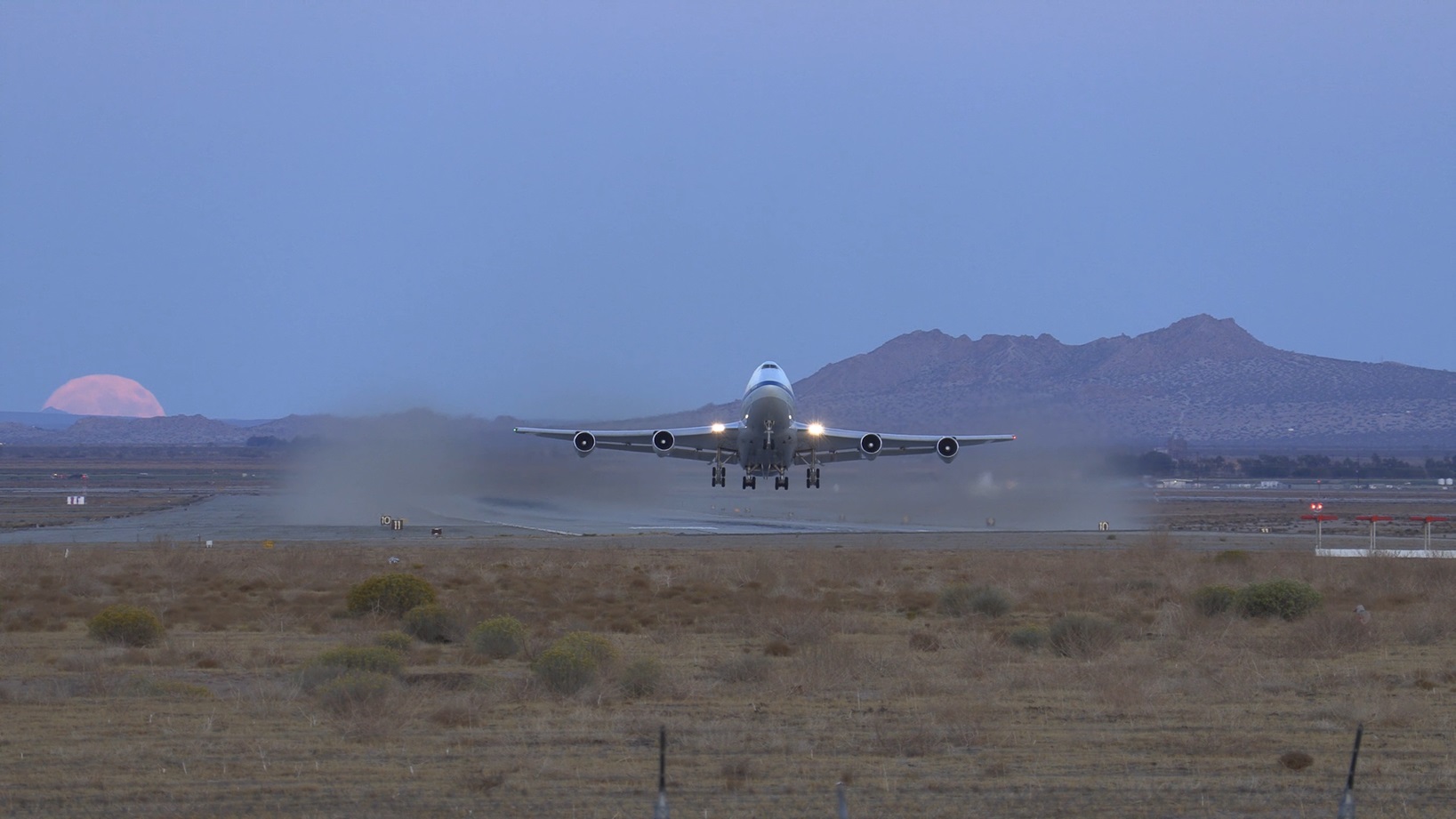
The Stratospheric Observatory for Infrared Astronomy (SOFIA), a modified Boeing 747SP that carries a telescope into Earth’s stratosphere. NASA
“Water is a valuable resource, for both scientific purposes and for use by our explorers,” Jacob Bleacher, chief exploration scientist for NASA’s Human Exploration and Operations Mission Directorate, said in the press release. “If we can use the resources at the Moon, then we can carry less water and more equipment to help enable new scientific discoveries.”
What is still unknown is how exactly the water came to exist on the lunar surface. Scientists are already considering several theories; it’s possible water could have been delivered from an outside source through micrometeor showers carrying molecules from other sources, or perhaps chemical reactions between the sun’s solar winds, the minerals in the moon’s soil, and radiation from the micrometeorites could strike just the right balance for hydroxyl to transform into water.
The next steps are to spend more time scanning the moon’s surface for further evidence of this phenomenon and to iron out exactly how it got there and how it’s able to stay where it is without evaporating in direct sunlight. According to the press release, “SOFIA’s follow-up flights will look for water in additional sunlit locations and during different lunar phases to learn more about how the water is produced, stored, and moved across the Moon.” Ultimately, this data will go toward the creation of the first water resource maps of the moon that will hopefully aid in future exploratory missions and lay the foundation for a continued presence in the years to come.

The moon as seen from the International Space Station, photographed by astronaut Randy Bresnik. NASA
Follow @TwinCitiesGeeks on Twitter or Like Twin Cities Geek on Facebook for more great stuff from Minnesota geeks in your feed!
About the Author

Joe Praska
Joe is an elementary-school teacher in Minneapolis with a particular excitement for teaching science. He began to dabble in writing and blogging in 2013 and has spiraled further and further down the rabbit hole ever since.


