
An Open Letter to Convention Organizers Regarding Race and Sexual Harassment
T. Aaron Cisco
With the widespread rollout of COVID-19 vaccinations, and safety measures and precautions to help enable safer environments for event attendees, 2021 has seen the return of conventions in a big way. Whether purely virtual, in person, or striking a balance between on- and offline, geeky gatherings seem to be on their way to fully bouncing back from last year’s lockdown.
I’ve written in the past about positive ways to interact with your fellow attendees who differ from you in order to ensure a pleasant, enjoyable con experience for all. But those articles were mostly focused on interactions among attendees, and—though the recommendations are equally applicable—they didn’t specifically address another frequent form of convention interaction: encounters attendees have with volunteers, staff, and special guests. It’s somewhat heartbreaking that even now, after all that we’ve been through over the past few decades and especially over more recent months, we still need to have some of these conversations. But it’s better to address these issues head on than to let them continue to fester, spread, and irrevocably taint the experience of convention life.
On Race
Two recent experiences I had are great examples of what to do and what not to do. Both instances involved a matter of mistaken identity due to racial profiling and internal notions of racial bias.
In the first instance I was at a convention chatting with some friends when security came over and asked whether I had been at the convention the previous evening around 10:00 p.m. I responded that I had and asked whether there was a problem. They replied that someone had reported a Black man harassing some people, and if I didn’t mind, could I tell them what I was wearing? I told them my about costume, which had been extremely distinctive, and showed them some of the pictures I had taken and posted to social that night. My friends also corroborated. Security thanked me for my time and apologized for bothering me, even going so far as to state that the only info they had was a “Black man” who had been was at the con the previous day and a description of what they were wearing, so while it wasn’t much, they still had to follow up and apologized again.
In the second instance, there was an issue with my registration pass. I had damaged it the previous night, so the next morning I went to the registration desk to request a new one or see whether there was a way to repair the one I had. I explained the situation to the volunteer at the desk, and they retorted, “Nice try, but you were just here trying that earlier”—implying that I had perhaps found a discarded pass and was trying to scam my way into acquiring a legitimate one. I corrected them politely, explaining that I’d been there yesterday (so they may have seen me then), but as I hadn’t been staying at the con hotel, I had gone home the previous night and had literally just arrived that morning. They doubled down, confidently declaring that no, they had seen me that morning running around talking to different people. At this point a different volunteer interrupted, explaining that I wasn’t the person the other volunteer thought I was. Rather than apologize for the gaffe, the first volunteer made a face and scoffed, then mumbled some nonsense about “can’t be too careful.” I spat a back a snarky remark that “we” don’t all look alike (having just been offensively falsely accused of something, I was no longer in the best of moods), to which the volunteer announced that they had a Black daughter. In complete awe that someone would try that cliché . . . for real . . . in 2021, I replied “That’s great—so do I.” The volunteer then excused themselves and had someone else help me with my pass.
These two instances were similar in terms of the underlying presumptions, but they were (clearly) handled in drastically different ways. In the first, the accusing parties phrased every question as, well, a question. They knew that they were working off incomplete, unverified information and acknowledged that this was the case. They didn’t start off with the accusation, they came from a place of inquiry, and when they were informed of the truth, they accepted the correction and apologized again. In the second instance, validation wasn’t even on the person’s radar. They’d already decided when they saw me that I was whoever they erroneously believed I was. There would have been numerous ways to objectively prove or disprove my claims. Con registration was online, so they could’ve simply asked to see my ID and checked it against the attendee list—in a handful of seconds, they would have had proof, and it would’ve spared them any embarrassment of wielding a false accusation. Worst of all was the brandishing of their nonwhite progeny as some sort of get-out-of-bigotry-free card.
Even if you may be unfamiliar with the term, I think it’s safe to say that many of us are aware of the cross-race effect—the fact that some people have a harder time distinguishing between the faces of those of racial groups different from their own. There are numerous theories and questions around the topic: is it a universal matter of visual-neural processes or merely an apathetic reflex based largely in implicit biases? But those questions are actually irrelevant when juxtaposed against behavior and expression. Just because you think or suspect something doesn’t mean you can, or should, act on it or speak to it—especially if the way you act or speak is with misplaced hubris and fallacious confidence. It doesn’t have to be as blatant or dramatic as the second experience I described above; even a short quip or passing “joke” can, and often does, cause immense harm to the recipient. It may seem insignificant to you, but to the person on the receiving end, the dehumanizing disrespect is anything but.
And when it comes to defensiveness, brandishing friends, family, and other familiars as though having BIPOC in your personal life is some sort of shield is actually much more offensive. Having Black children doesn’t mean you’re magically incapable of racism. (You know who else had black children? Thomas Jefferson, a man who wrote that “all men are created equal” and at the same time enslaved more than 600 people over the course of his life.) Proximity to BIPOC does not, by itself, automatically make you immune to offensive and/or regressive ideas about BIPOC. The same goes for proximity to people of other genders, sexual orientations, or disabilities.
On Sexual Harassment
It’s not just race-based interactions staff and volunteers need to be mindful about, either. I’m going to be brutally frank here: conventions draw some of the most attractive people from all corners of geekdom. Whatever “type” twirls your beanie, so to speak, you’ll find dozens or even hundreds of them at a con. But that’s wholly irrelevant. Even if your primary purpose for attending a con is to find someone (or multiple someones) to share a drink, a hotel bed, or the rest of your life with, there is zero justification for treating any other attendee with anything less than absolute, unwavering respect.
The stereotypes about geeks being socially awkward are often proven true. Many of us have interests at the fringes of the mainstream, so we may have missed opportunities during some key periods of social development to acquire certain interpersonal skills. Many of us were even drawn to our varied interests because of those missed opportunities. But this is no justification for predatory and/or harassing behaviors, and it never has been.
“Cosplay is not consent” is a phrase that’s (thankfully) become embedded in numerous con communities over the years. No matter what someone is wearing—or isn’t wearing, as the case may be—without a verbal, sober, enthusiastic “yes,” the answer to whether or not you may engage them at a level beyond basic courtesy and platonic familiarity is “no.” Period. Always. Full stop. It appears as though when it comes to physical interactions, this message has been received by more and more convention attendees and organizers, but it applies to verbal and noncontact interactions as well—especially from con staff.
At one con I attended, a young(er) acquaintance saw me from a distance, and instead of waving, they practically ran over me. Out of breath, they gripped my shoulders and begged me to hang out with them for the next hour or so because someone kept following them around. They went to a panel? He was lurking by the door. They went out for a smoke? He was feet away, ogling. They posed for pictures? He popped up behind the person who’d asked for a picture, with his camera in hand and a lascivious grin on his face. Of course, I agreed, and asked them whether they could (without drawing attention) point out their stalker. When I saw who it was, I was taken aback by the fact that the man was clearly a volunteer with the con. I was even more shocked when I escorted my acquaintance to the organizers to make a report, only for them to dismiss it, saying that as one of the volunteers, part of his duties was to walk around con, so it was probably just a coincidence. Could that have been the case? Maybe, but it’s unlikely. And even if it was, here you have an attendee who is in a palpable state of fear due solely to the actions of one of your volunteers. Hand-waving their concerns is more than callously discourteous; it treads deep into malicious territory. After realizing the types of people we were dealing with, neither my acquaintance nor I have ever attended that con, or any of the others run by the same people, again.
Both cosplayers and noncostumed attendees attend your event because there’s a level of assumed and implied comfort and safety. Betraying that trust is unfathomably egregious. If you have a staff member who has been accused of engaging—or proven to have engaged—in harassing behavior, whether it’s unwanted touching, stalking, or lewd and otherwise inappropriate comments, they need to be ejected from your convention immediately (and, depending on the offense, reported to legal authorities). Even at fan-run conventions where the staff is entirely composed of volunteers, the rule still applies. Volunteers may not be monetarily compensated, but for the duration of that event, they are professionals—and more than that, they’re professionals who are some of the most visual and recognizable ambassadors of the con brand. They may just be some 21-year-old fan who likes getting a free T-shirt and getting special access to events, but while they’re wearing that shirt and they’re at the event, their behavior needs to align with the same level of comfort and safety you want your convention to be known for.
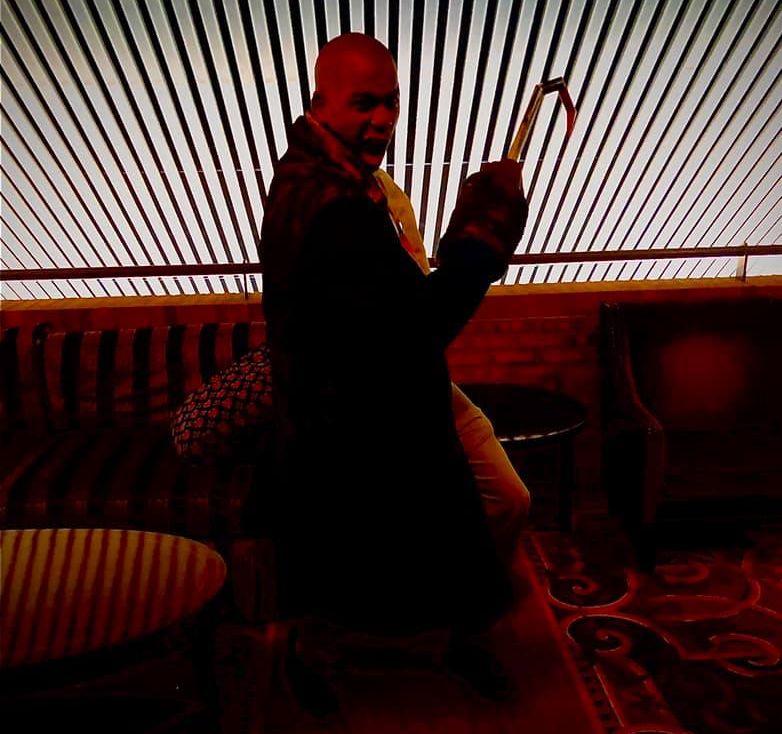
Do we have to summon Candyman?
If you think it’s no big deal, and you have no qualms with your con being known as the “catcalling convention,” “gropey gathering,” or “icky eye-balling event,” you should make that clear up front. In your social media posts, flyers, and advertisements, tell the public you don’t value their safety, and that there’s a good likelihood that if they attend, they’ll be subjected to harassment or worse. I mean, we’re going to find out anyway, so why hide it? Oh, because that would likely yield extremely low attendance and probably be the end of con? Exactly.
The Bottom Line
The remedy for all of these situations is ridiculously easy to apply. If you don’t want your con to be the racist con or the sexual harassment expo, then don’t employ staff and volunteers who engage in those despicable, inexcusable behaviors. And if anyone associated with the con does engage in that sort of activity, address the issue with the offended party, get rid of the offenders, and put as much space between them and your event as possible.
For any convention organizer who genuinely values the participation of all of their attendees (or, at the very least, wants to continue producing events that are popularly attended), deliberate and conscious measures to treat all attendees with respect and equity must be not only be place but followed by everyone from the head owners and organizers down to the temporary, short-time, one-time volunteers. And violators must be dealt with swiftly and verifiably. It only takes one brief interaction with or passing comment from one person to tarnish the reputation of the entire event.
I’ve heard innumerable accounts of this type of activity—and much worse—for years. In the decades that I’ve been attending geeky events, I’ve heard from literally hundreds of people who have either personally experienced this type of treatment themselves or know someone who has. While curing misogyny, racism, ableism, homophobia, transphobia, and other societal conditions that lead to this behavior may be a bit outside the scope of a convention committee, what organizers can and must do is actively, emphatically, and decisively take action to prevent, reduce, and redress those behaviors at your cons. As the world (slowly, safely) begins to reopen, the question is, will you?
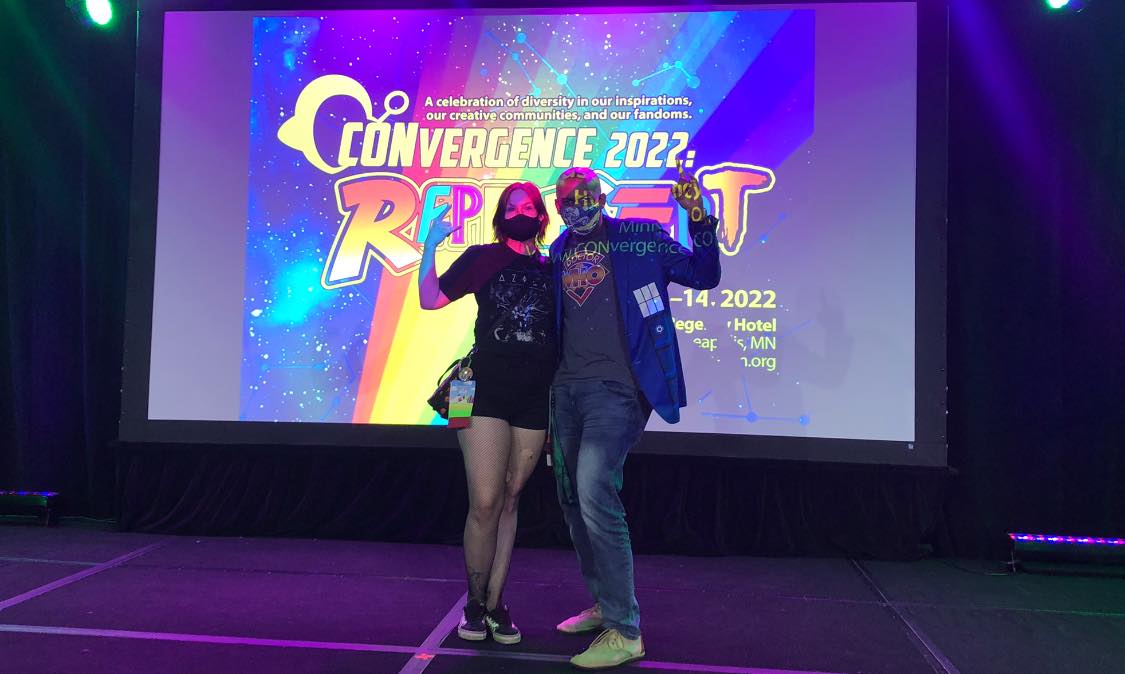
T. Aaron Cisco as a guest of honor at CONevrgence 2021.
Follow @TwinCitiesGeeks on Twitter or Like Twin Cities Geek on Facebook for more great stuff from Minnesota geeks in your feed!
About the Author

T. Aaron Cisco
T. Aaron is a local science-fiction author, award-winning television producer, veteran touring musician, lifelong Trekkie, co-founder of TC Trek Trivia and Wibbly Wobbly Wednesdays (Doctor Who Trivia), contemporary fashionisto, and above all else, an incorrigible nerd.


