
Defy the Night Defies Expectations in the Best Possible Way
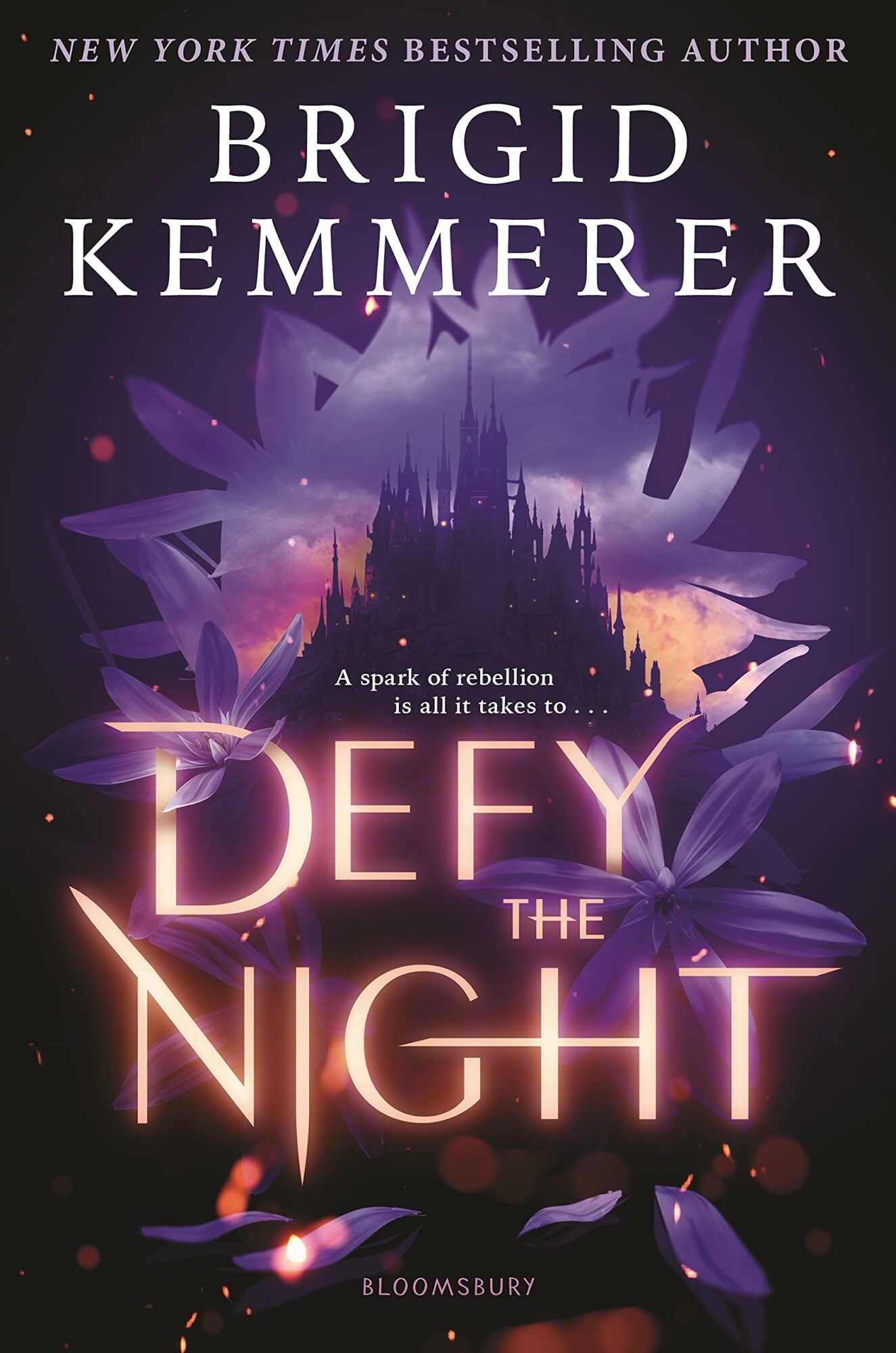
Bloomsbury YA
After reading and loving Brigid Kemmerer‘s Cursebreakers trilogy, I was a little hesitant to jump headfirst into the first book in her new fantasy series. I always love Kemmerer’s writing, but I’d grown so attached to Emberfall, I was worried that Defy the Night might not have that same magic. I can confidently say that this book far exceeded my expectations, and while it shares some surface similarities with the Cursebreakers books, it sets itself apart as a promising new trilogy all its own.
Defy the Night takes place in the kingdom of Kandala, which has been plagued by an epidemic referred to as “the fevers.” With the only known cure being an elixir made from Moonflower petals and the plants growing in just two of the kingdom’s sectors, the price and demand for medicine is high, with only the elites being able to afford the steep cost and a deadly night patrol tasked with arresting anyone bold enough to attempt to steal the ingredients. Tessa Cade, an aspiring apothecary, works in the early hours of the morning to make the elixir and distribute it to the less fortunate, assisted by her best friend Wes. Tension grows when a group of rebels begin to challenge the king’s laws, and after sneaking into the palace, Tessa finds herself butting heads with the king’s brother, Prince Corrick, who doles out gruesome executions to those who commit crimes. Revolution is imminent, but there’s more to Corrick than Tessa initially realizes, and they both become torn between duty and rebellion, especially when saving Kandala may mean destroying it first.
Prince Corrick is arguably one of the most morally gray characters in any of Kemmerer’s books, constantly putting on a façade of cruelty and ruthlessness to keep a firm rule on Kandala. After their parents were assassinated due to being too trusting, Corrick and his brother Harristan have kept the world at arm’s length, choosing to be feared and hated in order to survive. Corrick keeps Harristan in the dark about how he chooses to punish smugglers, wanting to spare the king from the gruesome reality that comes with being the King’s Justice—essentially, the executioner who does what he feels is justified to discourage theft. It took me quite a while to fully warm up to Corrick in particular, because even though his actions are always shown to be violent and extreme, he does nothing to try and change this, believing it’s warranted and necessary. However, as the book goes on, there are more glimpses into a softer side to him, and ultimately he wishes to do right by his people and truly help them, and his gradual willingness to break the cycle he’s created made him one of my favorite characters.
Tessa is almost the exact opposite of Corrick, wearing her heart on her sleeve and being openly honest with everyone she meets. Having lost her parents to the night patrol two years prior, she carries on their legacy of manually making the Moonflower elixir to deliver to the people of the Wilds, the impoverished area that borders the Royal Sector. Her friendship with Wes is heartbreakingly sweet, and he brings out her bolder side, and this support propels her to fight to do the right thing, even when she’s terrified. She rightfully calls Corrick out on his violent streak, and even after learning more about his past, she’s unwavering in her belief that things need to change to truly help the entire kingdom. She has several moments where she’s clearly frightened and in serious danger, but she chooses to do what she can to save lives, and knowing that she pushes through in the face of adversity made her all the more relatable.
The novel is heavily immersed in court politics, more so than in the Cursebreakers books, and the stakes are raised considerably with representatives for each sector, called consuls, meeting with Harristan and Corrick to discuss the state of Kandala. Allisander Sallister in particular is as slimy as his name makes him sound, getting under Corrick’s skin with his monopoly over the price of Moonflower petals and constant dehumanizing of anyone deemed to be beneath him, and he makes for a surprisingly amusing antagonist, getting his comeuppance more than once in extremely satisfying ways. The scenes with the consuls also bring insight into just how delicate the power balance truly is: Harristan may be king, but each consul has their own motives, and it’s a constant guessing game as to who has good intentions and who may be plotting something nefarious. The situation is not black and white, and no one is truly uncorrupt, making the narrative go in an interesting—and sometimes surprising—direction.
I haven’t touched on the romance because that is a very big spoiler, one I wasn’t anticipating but definitely appreciated in the grand scheme of things. All I can say is that Kemmerer is still talented when it comes to slow-burn romance and satisfying payoffs, and when things look to be hopeless, a twist is thrown in that changes everything, making an already great story that much more brilliant. Defy the Night didn’t have me swooning too much over the male leads—sorry, Wes, Commander Grey still has my heart—but overall it’s definitely a strong start to what’s sure to be a fantastic trilogy. I can’t put into words just how excited I am to see where Tessa and Corrick’s journey leads them.
Defy the Night is out now. You won’t want to miss it.
Follow @TwinCitiesGeeks on Twitter or Like Twin Cities Geek on Facebook for more great stuff from Minnesota geeks in your feed!
About the Author

Hannah Testa
Hannah hails from Edina and is currently buried under a pile of unread books. Her hobbies include Funko POP! collecting, spending hours at a time at the library, and watching terrible Lifetime movies. She’s working on her first YA novel.


