
Luminous Shines, but Not as Brightly as It Could Have
Inkyard Press
On the surface, Mara Rutherford’s new YA fantasy novel, Luminous, sounded like a book I would immediately love. It promised magic, adventure, a quest to take down the villain, and the friends-to-lovers trope I adore so much. And in a way, Luminous checked all of these boxes, but I wasn’t quite satisfied by the time I finished reading. Along with the elements I enjoyed, there were some that I didn’t like or were just downright confusing, and they weighed down this book from truly being a new favorite of mine.
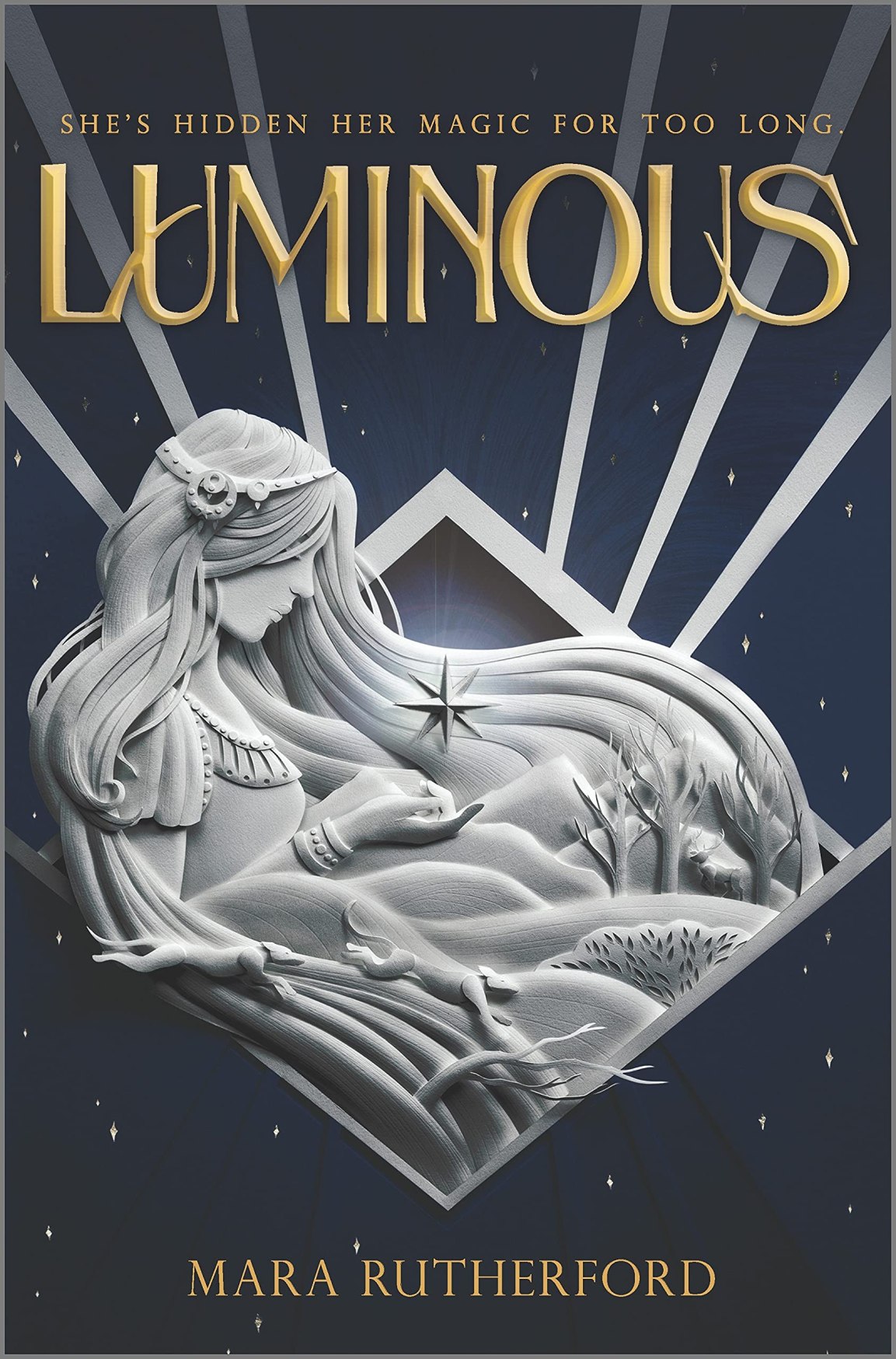
Luminous is set in the fictional kingdom of Antalla, where mages have been driven into hiding by Lord Darius, the king’s advisor and a warlock himself. If caught, mages are forced into servitude to Darius, or they face deadly consequences. Liora Duval has spent her entire life trying to suppress her glowing skin in order to keep herself and her family safe, but Darius takes her younger sister as collateral and Liora has no choice but to do what he wants. When she discovers Darius may have more nefarious plans than anyone else realizes, Liora and her best friend Evran find themselves in a delicate balancing act to keep Antalla safe, because there are far more dangerous forces that pose a threat to the kingdom.
Liora’s internal struggle reminded me a lot of 2019’s Captain Marvel, with Liora growing up learning to suppress her magic and later being manipulated by Darius into thinking he was the only one who could keep her in check. Her magic was never meant to lie dormant, and Darius is right in that it needs to be controlled, but his reasons for mentoring Liora have more to do with using her magic for his own purposes than a true interest in teaching her. This leaves Liora with the choice of letting Darius use her or potentially harming her loved ones in the future, and that manipulative way of thinking is what plagues her for the majority of the novel. That narrative of a woman having to hide part of herself simply to fit in or because she’d lose control is a familiar one, and I was glad to see Rutherford truly have Liora struggle with going outside of her comfort zone and fully embracing the power she had—both her magic and her independence.
As much as I didn’t like him as a person, Darius is an interesting character in that his magic is the ability to absorb other mages’ powers, and this helps him fill the void that he has become over the years. That emptiness drives him to do terrible things to mages and makes it dangerous to practice any kind of magic for fear of being discovered and forcibly employed to do his bidding. Rutherford gives him reasons to be the way he is, and Liora struggles with feeling sorry for him while also condemning his past actions, but I appreciated that the novel never once justified anything he did or made him out to be someone who needed redemption from the heroine to become “himself” again. That hollow emptiness is who he really is, and Rutherford makes clear that it’s not Liora’s responsibility to allow him to siphon her magic to fuel his own.
Liora and Evran’s friends-to-lovers subplot took me a while to get invested in, especially because Evran starts out very distant and cold with Liora the first few times he appears. The more time they spend together, the more clear it is why Liora fell in love with him in the first place, and Evran’s reasoning of keeping away from her was for her own safety—much like Liora does to him later, when her magic is awakened and she fears losing control. What struck me about this is that neither of them truly gives up on the other: even with broken hearts, they are determined to support each other no matter the danger or cost. This is a testament to why they became friends in the first place, and that foundation is what makes their romance truly shine.
Given the relatively simple plot summary, I was surprised at how many twists this novel had. Every other chapter there was some kind of revelation or discovery made that Liora had known nothing about, and doing this multiple times in succession took me out of the narrative because of how repetitive it became. There were also several branching subplots that could have been their own books, and as a result they were wrapped up far too quickly and threw the pacing off for me. It felt disorienting when Liora went on one journey in the middle of the book, and after a few chapters had to go on another that lasted much longer, only to have that end abruptly to make way for more of her emotional arc. There were several side characters who weren’t fully developed and were dropped into the story at odd times simply because they’d play a crucial role later, but their integration never felt natural and they served more as plot devices or twists than actual characters.
Luminous was simultaneously what I expected it to be and a completely different story from what I anticipated. While it was unfocused and irritatingly repetitive, the main characters were well written and Liora’s emotional arc was done very well. There’s a lot to like about Luminous, and I think it’s worth at least one read. Just be prepared for the plot twists … or rather, anticipate an overwhelming number of them so you’re not completely disoriented.
Luminous is out now.
Follow @TwinCitiesGeeks on Twitter or Like Twin Cities Geek on Facebook for more great stuff from Minnesota geeks in your feed!
About the Author

Hannah Testa
Hannah hails from Edina and is currently buried under a pile of unread books. Her hobbies include Funko POP! collecting, spending hours at a time at the library, and watching terrible Lifetime movies. She’s working on her first YA novel.


