
Wish You Were Here Is a Heartbreaking Getaway
Ballatine Books
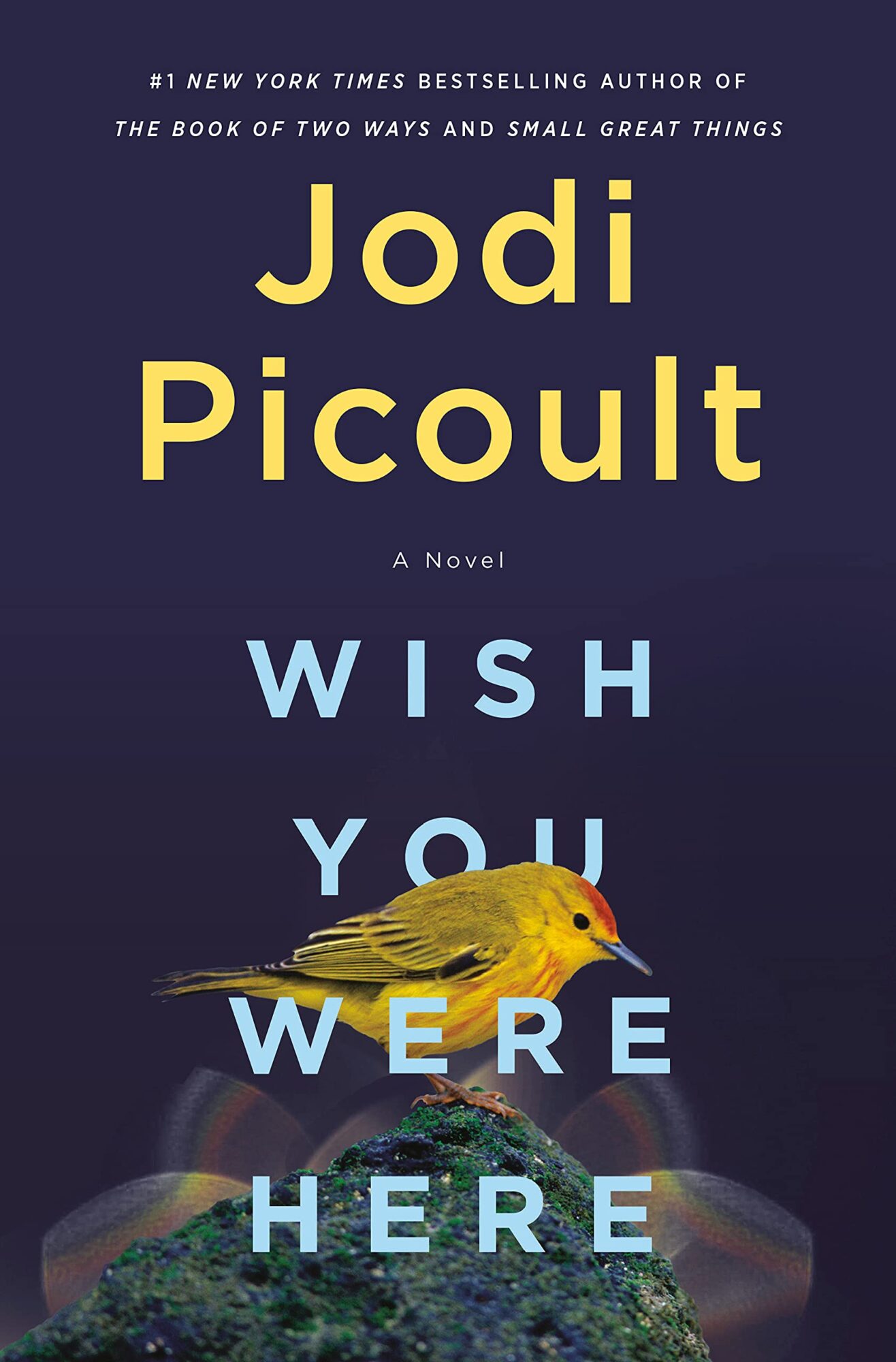
Jodi Picoult’s new novel, Wish You Were Here, opens on March 13, 2020—the day a state of emergency was declared and the realness of COVID-19 started to sink in for many of us. At the time, it was hard to gauge how long lockdown would last, and I admit I was naïve in thinking it wouldn’t last more than a month or two. To say a lot has happened since then is an understatement, but one major theme that keeps popping up is normalcy: Are we ever going to get back to it? Do we need to redefine what it means? Should we accept our current situation as our permanent way of life? We’ve all adapted and made changes to the way we live, which is one of the main themes Wish You Were Here explores with its protagonist, Diana, as she finds herself stranded in the Galapagos at the start of the pandemic.
Diana is right on track with the plan she’s mapped out for her life, with a possible promotion at the art auction company she works for and the high probability that her boyfriend, Finn, will finally propose. Things fall apart when her job is thrown into jeopardy and Finn is needed at the hospital to work the frontlines, leaving Diana to take their planed vacation to the Galapagos alone. The journey there consists of lost luggage and the panic-inducing knowledge of being alone in an unfamiliar place, and after a split-second decision, she finds herself on the island of Isabela, which has just undergone lockdown and where she doesn’t speak the language. Her situation alone is enough to make me feel anxious, but it perfectly mirrors the early days of the pandemic, highlighting the confusion and terror many of us felt at not knowing what was ahead. (The fact that she is alone and without many resources specifically brings to mind the panic buying that resulted in resources being largely unavailable.)
There is little to no internet or cell phone service on Isabela, but Diana does receive sporadic emails from Finn that chronicle the horrors healthcare workers have faced, each email getting progressively more desperate. Finn describes the heart-sinking feeling he gets when treating COVID patients, many of them coming to the ER too late for intubation to be effective. Even with the thorough job the doctors and nurses do to keep themselves clean, many of them still keep their distance from dying patients as a precaution, and supplies deplete at a frightening rate as more people arrive to be treated. It’s difficult to read, a brutal reminder that although things have improved, healthcare and frontline workers were overwhelmed in the first few months of the pandemic. It’s even harder to digest when remembering that all of this happened in the span of less than a month.
Isabela has no cases of COVID, but adjusting to life there is still difficult for Diana. She’s just left behind a life of constant motion, always thinking ahead and never being fully present. To the locals, she’s an obvious tourist out of her depth, but she forges a friendship with 14-year-old Beatriz, the abrasive daughter of an ex-tour guide who lives on the island. This relationship was my favorite to see develop, because both Beatriz and Diana allowed themselves to be vulnerable: Diana with her passion for making art rather than selling it, and Beatriz with her complicated relationship with her father, Gabriel. They treat each other as equals, allowing Beatriz to challenge Diana’s thinking at times and ask if she really is happy with her life back home, something that she’s never had time to truly consider.
Gabriel and Diana have a timid friendship that slowly grows into romance, and although I personally wasn’t too fond of him, I could see why Diana was so drawn to him in the first place. After finding reception and having a very brief phone call with Finn, cracks start to show in how he and Diana communicate, which as a reader made me a little frustrated. Until this point, Diana and Finn seemed like a perfect couple, extremely sweet and considerate of each other’s feelings, but it’s revealed that when it comes to conflict, they don’t exactly work through it, leaving many of their personal issues unresolved. It bothered me to see them expect each other to be mind readers, but as I read further, I realized that that was the point. Diana confides things to Gabriel because she feels like she can trust him and tell him what it is she needs for support—something that’s glaringly absent with Finn. It’s a realistic and bittersweet situation, but ultimately it allows Diana to figure out just what she needs from a romantic relationship in order for it to work.
Unfortunately, I am unable to go further into depth, due to major spoilers that happen about halfway through the book. I’m curious to see how the storyline is received, but more than that, I’m curious as to what readers will take away as a whole. The past two years haven’t been easy for anyone, but despite that, we push forward and evolve, finding new ways to adapt to a world that has become unfamiliar and unpredictable. The things that I’ve cherished the most during the pandemic—books, YouTube, Taylor Swift’s four new albums (and counting)—seem arbitrary and frivolous, but they’ve given me comfort and a sense of hope. Diana’s story is similar, her circumstances forcing her to slow down and enjoy what is close to her heart, allowing her to integrate the new with the old and create a life where she can truly find happiness. As cheesy as that may sound, it’s always been my belief that we need more stories like this as a periodic reminder that we are not alone in how we feel. Picoult has given us something heartbreaking and uplifting, a reminder of where we’ve been and the possibilities of a brighter future.
Wish You Were Here hit shelves November 30, 2021.
Follow @TwinCitiesGeeks on Twitter or Like Twin Cities Geek on Facebook for more great stuff from Minnesota geeks in your feed!
About the Author

Hannah Testa
Hannah hails from Edina and is currently buried under a pile of unread books. Her hobbies include Funko POP! collecting, spending hours at a time at the library, and watching terrible Lifetime movies. She’s working on her first YA novel.


