
Divine Rivals Is a Devastating Story of Love and War
Wednesday Books
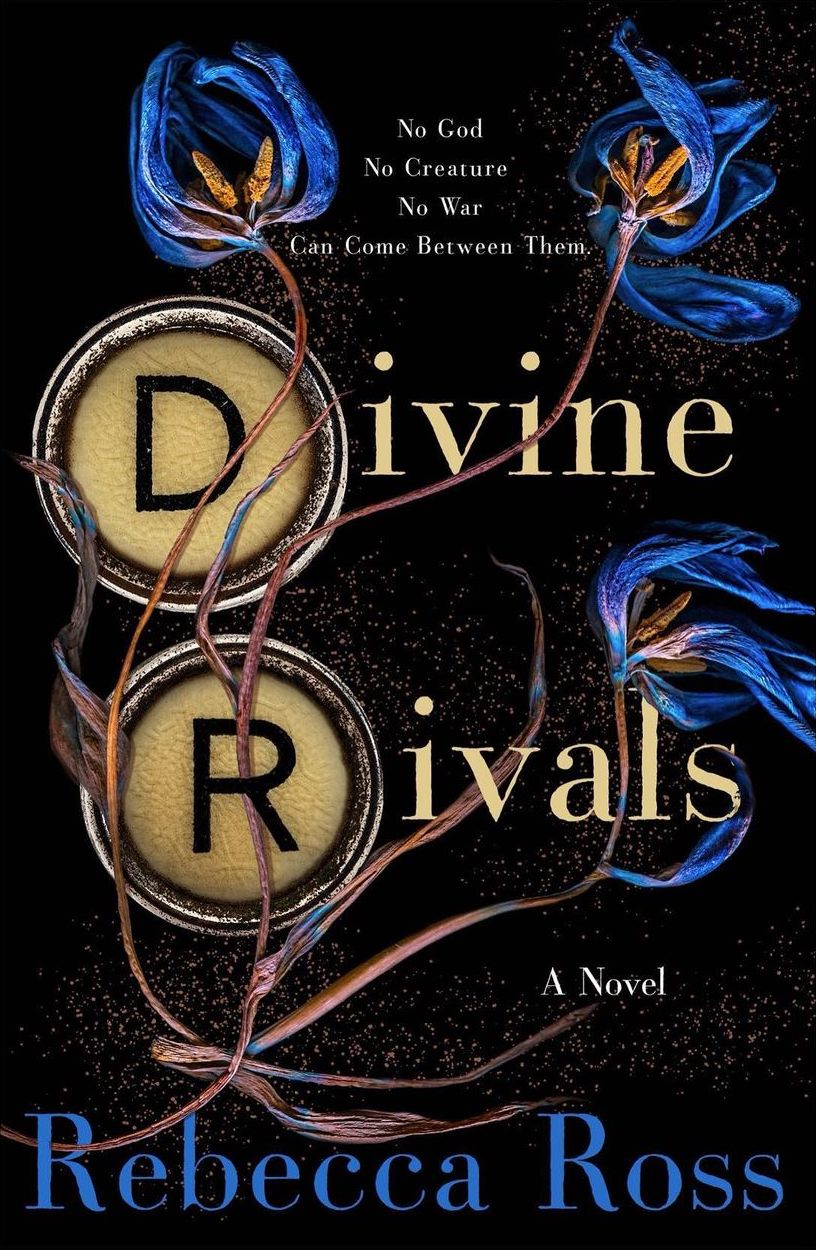
On the surface, Rebecca Ross’s new novel, Divine Rivals, is a story of contradictions. It’s set in a world where two ancient gods are at war with each other, but their armies are made up of mortals. The two main characters, Iris Winnow and Roman Kitt, have a rivalry fueled by annoyance and secret admiration. A love story unfolds through letters between the two, but while Roman knows who he’s writing to, Iris does not. It’s a story about the loss and horrors of war, balanced by human connection and resilience. Ross weaves contrasting ideas throughout, making it both hopeful and heartbreaking.
The worldbuilding is done subtly, with information revealed gradually as the story progresses. This is a world that’s similar to our own—to an extent. It’s heavily inspired by the aesthetics of the World War I era, with typewriters being one of the most advanced forms of technology available, but it also has a few magical quirks. Grocery-store shelves know how much money a person has and how much food they can afford. Houses can read moods and follow basic commands, like turning lights on and off. Dacre, one of the gods currently at war, sends gigantic hounds and winged creatures called eithrals to terrorize and slaughter anyone in their path. It’s a unique universe, one that is both inviting and imposing, and that dichotomy is why it works so well. The familiarity of its realistic elements helps to ground the reader, and the addition of the fantastical adds a bit of suspense, a sense that there’s no telling what might happen next.
Similarly, the protagonists’ rivals-to-lovers arc is rooted in contrast and gives way to one of the sweetest love stories I’ve had the pleasure of reading. Iris and Roman are both vying for a columnist job at the newspaper they write for, and their personalities immediately clash, causing them to exchange banter and insults whenever they’re together. Iris, coming from a working-class background, finds Roman to be conceited and entitled due to his family’s wealth, while he views her as flighty and uneducated because she dropped out of school and is constantly late to work. All the while, the two are secretly reading each other’s writing and constantly warring with themselves about their feelings, especially when they both head to the war front and are faced with the possibility of death. It’s very “will they, won’t they,” and it’s even more amusing to see that everyone around them is more aware of their mutual attraction than they themselves are. It helps that they’re both solid characters in their own right: Iris is trying to navigate life while her brother is off fighting in the war, and she sees writing as an extension of herself; Roman feels pressured to live up to his family’s expectations but knows deep down that he wants a simpler life than the one he’s being forced into.
What really cements Iris and Roman’s relationship as swoon-worthy for me is the letters they exchange. Iris writes letters to her brother that mysteriously disappear when she slides them under her wardrobe door, and after months of no reply, she finally receives one, only to realize that whoever has been getting her letters isn’t her brother at all. The dramatic irony (and this premise is described in the book’s marketing copy, so I’m not giving away spoilers here) is that Iris is left in the dark about this, but the reader learns that Roman has been on the receiving end of Iris’s letters, each piece of paper sliding out from the door of his own wardrobe—and he’s figured out that she’s the one penning them. While their correspondence is a little deceitful on Roman’s part, he’s open and honest with Iris about the things he chooses to share, just as she is with him. The reason they’re able to communicate through magic isn’t revealed until about halfway through the novel, but it bridges them together in an unexpected, comforting way. They fall in love with each other through their words, Iris likening that vulnerability as shedding armor and “giving a piece” to someone trustworthy. Their letters become an oasis for them, something to look forward to even when the future is so uncertain.
Divine Rivals is probably the most devastating book I’ve read in a long time, and it’s easily my favorite of 2023 so far. The cliffhanger ending still has me reeling, and there are unsettling descriptions of wounded soldiers and the very real danger war creates, but Iris and Roman were more than worth the negative emotions I had when reading. As a hopeless romantic, their multilayered love story hit me hard, and I’m eagerly waiting to see where the next book takes them.
Iris asks several times, “Can you fall in love with someone you’ve never met?” And to that I say yes, you can, because these two—and Ross’s writing—have my heart.
Follow @TwinCitiesGeeks on Twitter or Like Twin Cities Geek on Facebook for more great stuff from Minnesota geeks in your feed!
About the Author

Hannah Testa
Hannah hails from Edina and is currently buried under a pile of unread books. Her hobbies include Funko POP! collecting, spending hours at a time at the library, and watching terrible Lifetime movies. She’s working on her first YA novel.


