
Worldbuilding Falls Flat in A Prayer for Vengeance
Page Street Kids
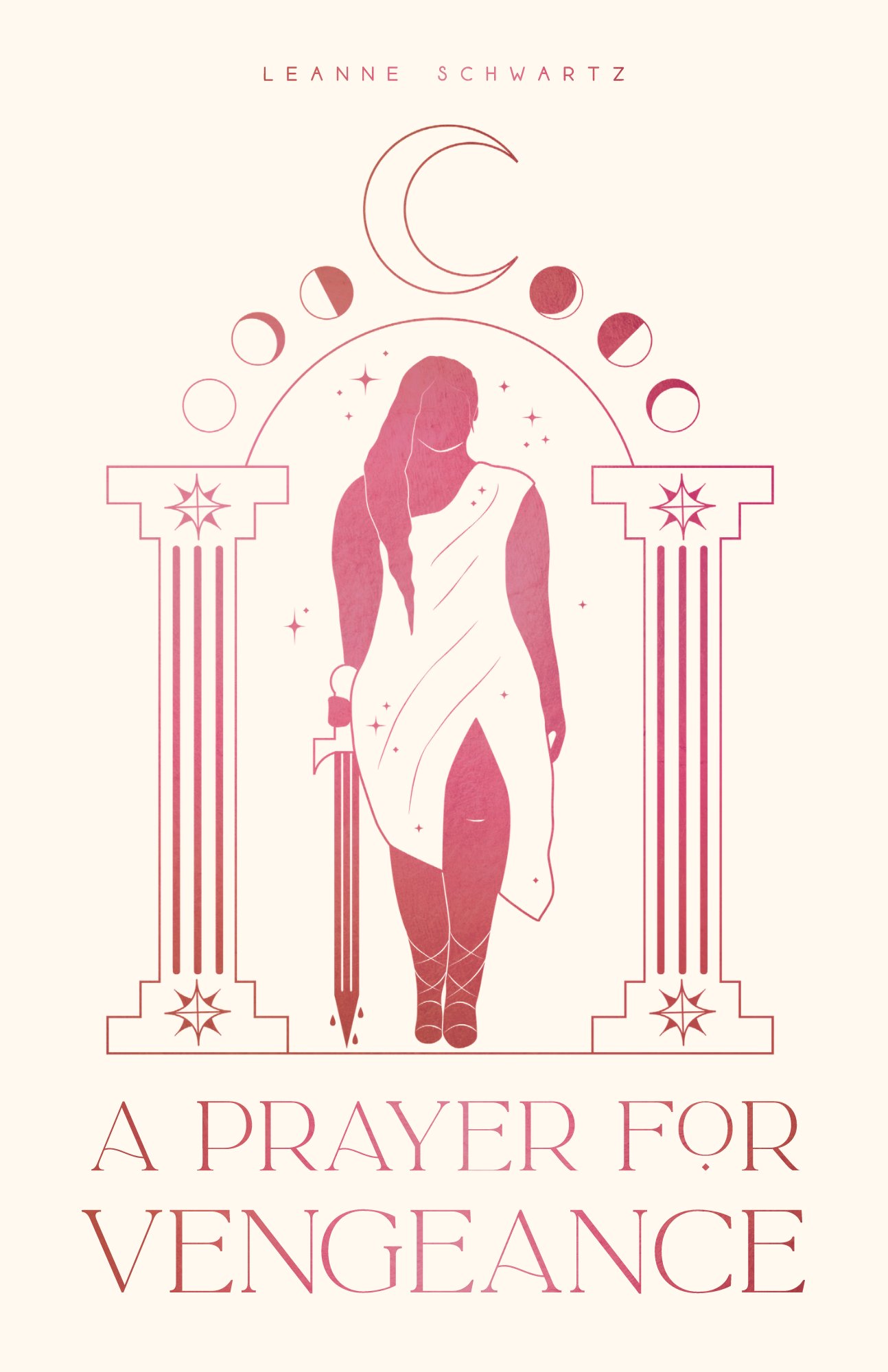
Leanne Schwartz’s debut novel, A Prayer for Vengeance, looks like a straightforward tale of retribution on the surface: the story of a warrior hellbent on punishing those who did her wrong, with the Pygmalion twist that she was turned into a statue and has recently been awoken by an unassuming young man praying to what he believed was an inanimate object. And in a way, it is that simple, but it’s buried underneath religious corruption and politics and a magic system that doesn’t make sense half the time. Reading it was an odd experience of being able to follow the plot but getting hung up on on details, knowing what’s happening but being unable to connect the dots to truly understand what the author is saying. It’s an enigma of contradictions that all boil down to poor worldbuilding and the absence of important context.
The main characters, Gia and Milo, are pleasant enough and relatable in their struggles to feel included—Gia wishing her elder sister listened to her more, and Milo feeling unappreciated as a ward of the temple he lives at. Both are also conscious of standing out from those around them—Gia because she’s plus-sized and Milo because he’s autistic. Schwartz embodies near-seamless representation of these aspects; although the characters are painfully aware that most people define them by their differences, each trait is only one facet of who they are instead of the author making them their entire personalities. While centuries separate them initially, their similar predicaments parallel each other nicely, especially because they have both previously sought acceptance from Ennio, the man who turned Gia to stone and who has manipulated the people of Trestatto in his ongoing quest to maintain power. Gia and Milo become each other’s support system, and their enemies-to-friends-to-lovers story is sweet, if rushed at times.
There’s a stark imbalance when it comes to Gia the two characters’ chapters, with Milo having the advantage of his everyday life showcased to establish his place in the universe. As a temple ward, he’s desperate to earn his place as a scribe and prove his worth, with the worldbuilding working alongside his individual arc to emphasize his feelings of loneliness living under a rigid, often uncaring religion. But aside from the first chapter, all we know about Gia’s life before she turned to stone comes from her inner monologue. Because her focus is on avenging her sister and wrestling with her self-loathing, her life centuries before the story proper takes a backseat, and we never truly get to see the person she was—we only see the aftermath of her choices and her desperate attempts to make amends. I couldn’t help but wish there were flashback chapters for Gia to give more foundation to her character, to show us what she was like and the lead-up to her imprisonment at the hands of Ennio. For how influential he is in the destruction of Gia’s world, they don’t interact much in scene, and his betrayal is mostly detailed after the fact through Gia’s thoughts.
Worldbuilding in any kind of fantasy can suffer from info dumping, and this book has plenty of it. If it’s done right, I’m so immersed that I don’t mind heavy exposition when it can’t be avoided. But the world of A Prayer for Vengeance is somehow detailed and vague at the same time: technology is nonexistent and there are monsters roaming the world, giving Greek mythology vibes, but how big is that world? Everything takes place inside the city of Trestatto, and while there are mentions of other cities, there’s no indication of where they are or what they’re like outside of being unsafe.
The biggest question mark hangs over the nameless religion practiced by the characters. We know a goddess named Magna is at the center of worship, but we also know that most of her history has been rewritten by Ennio to omit her sisters, Stregna and Alta. How much has been changed or preserved is never clear, only that his connection with Magna is one he can control, which is why he’s buried the truth of her sisters’ existence. Even the excerpts from the Book of Invocations, a sacred tome lost to time, are puzzling with their placement at the start of each chapter—without strong context clues, they don’t add much to the story, and whatever connection they’re supposed to have is muddled at best and frustratingly dense at worst. I finished A Prayer for Vengeance feeling like I needed a crash course in its religion, if only to go back and piece together some of the rules that never quite made sense.
All told, it’s is a perfectly fine book, one I wish I’d enjoyed more. Schwartz clearly has a plethora of ideas given how much effort she put into crafting Gia and Milo’s world, and this is only her first novel, which leaves room for improvement down the line. As it stands, while I can say my reading experience was unique, it wasn’t as good as I was hoping. I’m sorry, A Prayer for Vengeance: it’s not you, it’s me.
Follow @TwinCitiesGeeks on Twitter or Like Twin Cities Geek on Facebook for more great stuff from Minnesota geeks in your feed!
About the Author

Hannah Testa
Hannah hails from Edina and is currently buried under a pile of unread books. Her hobbies include Funko POP! collecting, spending hours at a time at the library, and watching terrible Lifetime movies. She’s working on her first YA novel.


