
A 2026 Oscars Guide to Best Picture Nominees
The 98th Academy Awards will air on ABC and Hulu on Sunday, March 15, starting at 6:00 p.m. Central Time. If you’re curious whether there are any Best Picture nominees you might be interested in watching before then, you came to the right place.
Some of Twin Cities Geek‘s film reviewers have divvied up the nominated films to provide our general thoughts on what’s worth your time and what’s not. It was a great year for movies, with a lot to enjoy across all genres, so we hope this will make your movie-watching decisions a little easier.
Bugonia
Courtesy of Focus Features
Reviewed by: Adam Lusch
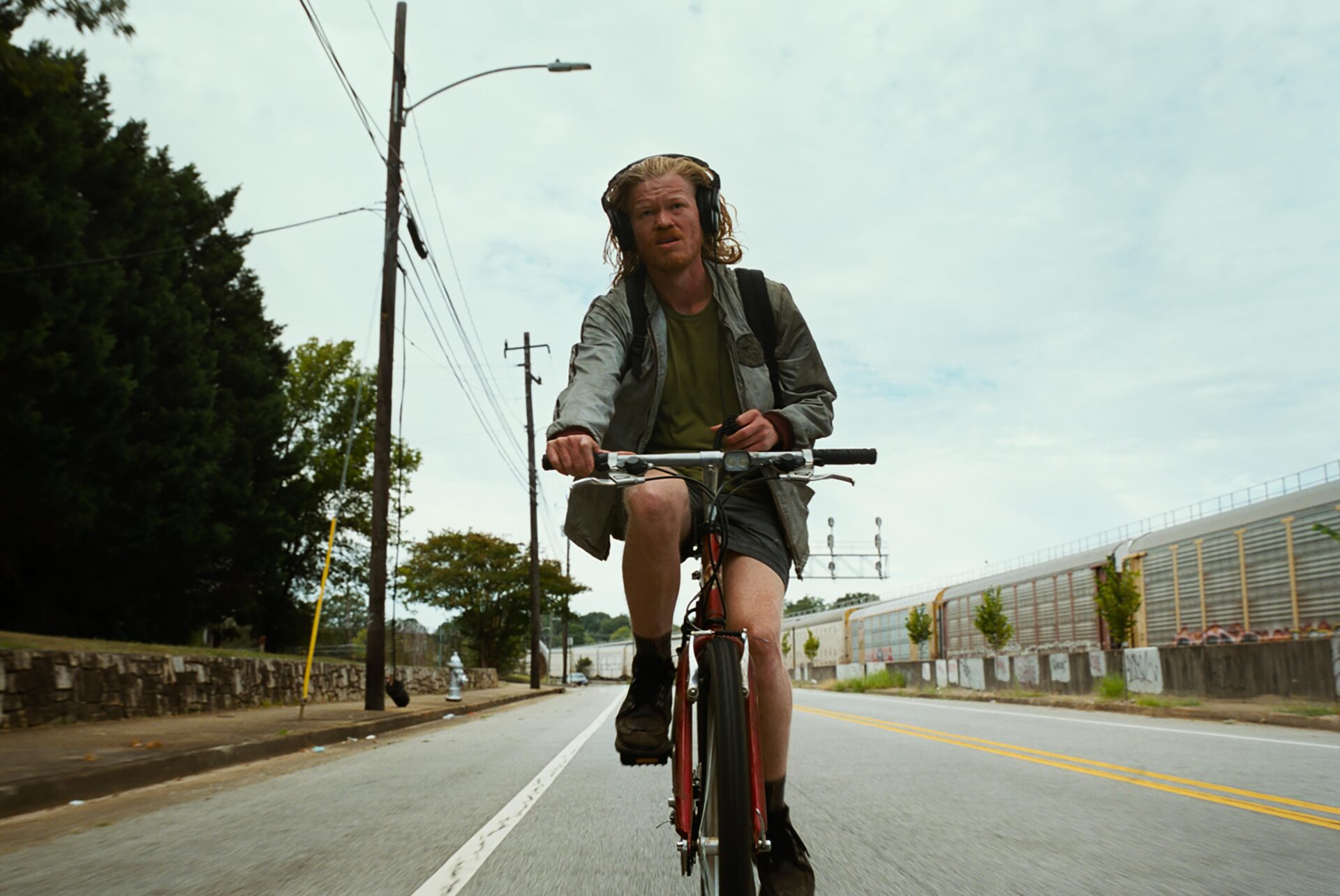
If you’re into dark comedies with a hint of sci-fi, Bugonia will be right up your alley. Yorgos Lanthimos’s newest film follows Teddy (Jesse Plemons), an obsessive conspiracy theorist, and his impressionable cousin Don (Aidan Delbis) as they kidnap a successful pharmaceutical CEO named Michelle Fuller (Emma Stone). Teddy believes Michelle is an alien trying to destroy humankind and hopes to expose her secret to inevitably save the world. Plemons and Stone work well together to create an atmosphere of tension as they play a mental game of chess trying to manipulate each other into making the first mistake. I was going back and forth the entire movie trying to guess how things would play out, and I was pleasantly satisfied with how the story ultimately concluded. In a year of great lead performances, I think Jesse Plemons was this year’s biggest Oscar snub. For me, he’s really what makes this film stand out, and I think his acting is on another level. He does an amazing job creating a character so full of desperation and instability while also making him likable enough for the audience to cheer him on. Like most films by Lanthimos, Bugonia does not shy away from uncomfortable and sometimes disturbing situations. This might be a turn-off for some viewers, but there is a mixture of sharply comedic moments that help offset the films dark tone. While you do have to be in the right headspace to watch it, if you’re willing to go along for the ride, you will have a very unique and memorable experience.
F1

Courtesy of Apple Original Films
Reviewed by: Mark McPherson
Brad Pitt plays legendary racer Sonny Hayes, who returns to the world of Formula 1 racing to save a struggling team—the perfect opportunity for him to redeem himself after an accident prevented him from rising in the ranks. His road won’t be an easy one, as he’ll have to contend with the hotshot fellow racer Joshua (Damson Idris). Director Joseph Kosinski puts just as much effort into stellar racing sequences for this film as he did for the flight scenes of Top Gun: Maverick. There’s nothing particularly original in how the film races around a familiar story track, but there’s just enough technical prowess on display to appease even a non-gearhead like me.
Frankenstein

Courtesy of Ken Woroner/Netflix
Reviewed by: Ryan Sanderson
One of the films that inspired Guillermo del Toro’s career was Victor Erice’s The Spirit of the Beehive, which tells the story of two children inspired by a traveling screening of James Whale’s 1931 Frankenstein. You can find so much of the DNA of del Toro’s career in that single film—the romance of moviegoing, the terror and uncertainty of childhood, the mythical allure of Mary Shelley’s two-century-old novel (and its subsequent film adaptations), the way new generations process and repurpose the mythology of the past. In a sense, the director has been retelling Frankenstein his whole career—most of his films explore how we define monsters and the relationship between creator and created, between the individual and society.
I have some qualms about the pacing, a few minor story beats, and some ineffective CGI, but that thematic core makes the 2025 update of Frankenstein del Toro’s best film since Pan’s Labyrinth and perhaps his defining statement as an artist thus far. This adaptation transforms Dr. Frankenstein (Oscar Isaac) into an arrogant, emotionally abusive father figure and offers Lady Elizabeth Harlander (Mia Goth) as a more empathetic mother figure alternative. There’s something simple—maybe overly simple—about this transformation of Shelley’s novel into a story of parental influence and childhood trauma. But it lives and breathes in the moment-by-moment execution, in the vulnerability of the newly birthed creature (Jacob Elordi) chained in the basement of his creator’s dungeon, in the surprising pathos of the ending. It’s a fitting thesis for a filmmaker who has spent his career humanizing monsters and exploring the monstrous potential of humanity.
READ: At Home with Monsters Invites You into the Mind of Guillermo del Toro
Hamnet
Courtesy of Agata Grzybowska/Focus Features
Reviewed by: Ryan Sanderson
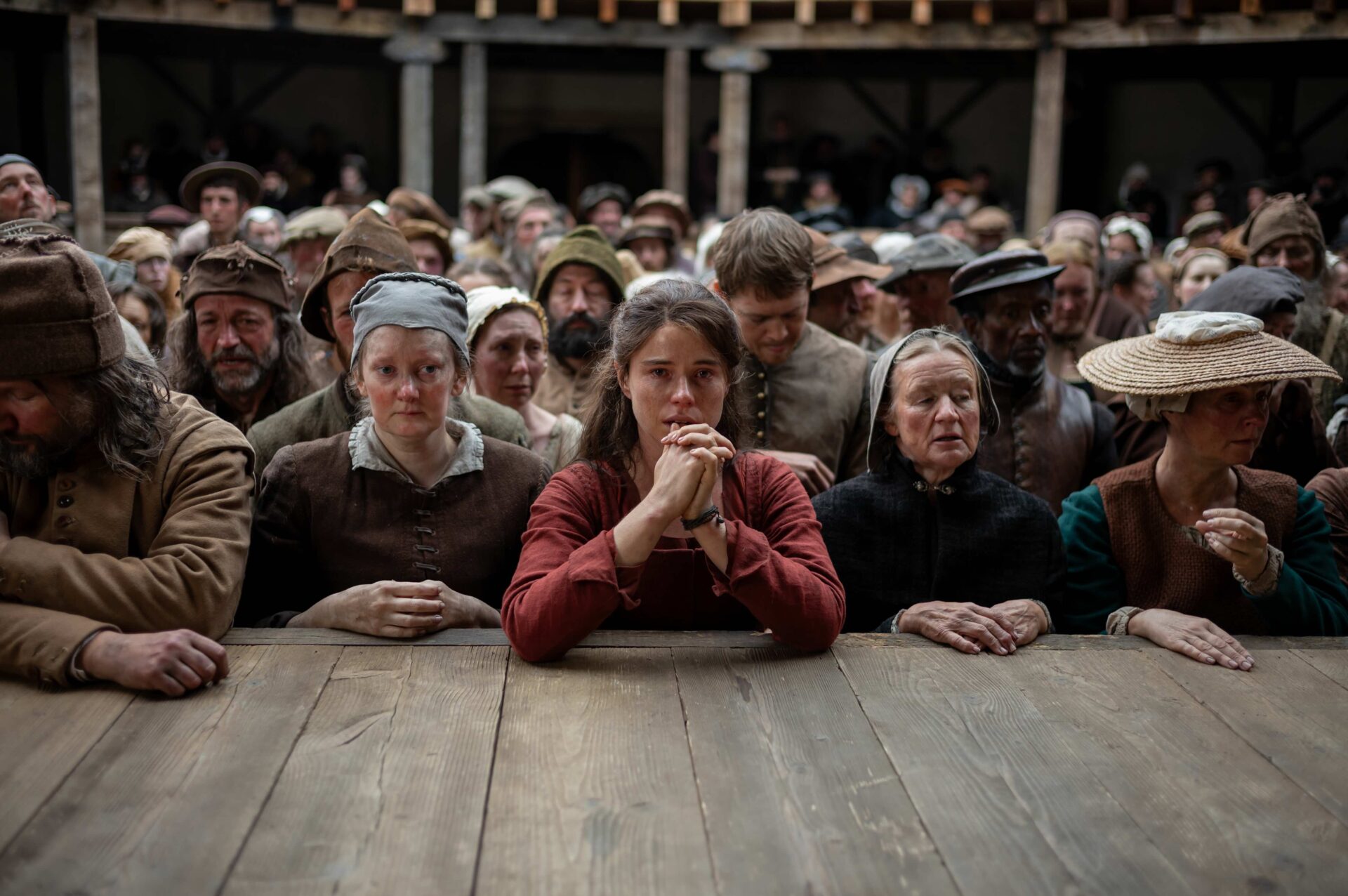
The day I saw Hamnet, Netflix announced its 70-whatever-billion-dollar intention to buy Warner Bros. (since then elbowed out by Paramount). I took a moment to stare nostalgically at the large mural hanging over the lobby of the Rosedale AMC, which shows figures from The Wizard of Oz (before which no films existed) through Pierce Brosnan’s James Bond films (clearly the pinnacle of modern cinema). It was such a time-specific image from one of the last moments when movies were the culture’s defining medium. Noting that mural’s faded edges, I felt like I was attending a funeral. So how much of the 30 minutes I spent weeping during the final hour of Hamnet was a result of the movie, and how much of it was me projecting my own grief, outside the context of the film? Honestly, I’m not sure it matters.
Hamnet conjures that particular ghost often, the relationship between real-life pain and the art who tries to transcend it. I’ve seen a lot of reviews note that Hamnet is not subtle. And it’s not. But funerals aren’t subtle either. Sometimes it’s worth exaggerating a little so everyone has the chance to feel together. And to be clear, I’m not saying movies are dead. Many of the films featured here are strong evidence to the contrary! But movies, like all of us, are subject to the forces of entropy. The day may come when I’m an old man commuting to the last cinema in town, watching movies from 20 years ago, like a widow visiting her husband’s grave. It’s part of the raw deal of being alive. Beautiful things blossom and wither before our eyes. Hamnet explores the relationship between grief and art that has helped many people hold on a bit longer. It’s not a perfect fix—Hamnet’s far from a perfect movie—but it still moves me a lot.
Marty Supreme
Reviewed by: Adam Lusch

Courtesy of A24
Marty Supreme was probably the most entertaining film I saw in 2025. Timothée Chalamet’s portrayal of a cocky but somehow still likable table tennis superstar was absolutely riveting. His performance and director Josh Safdie’s anxiety-inducing storytelling, previously displayed in the films Uncut Gems and Good Time, culminate in a chaotic but satisfying spectacle. There are also some great unexpected performances by Odessa A’zion, Gwyneth Paltrow, and nonactors like Kevin O’Leary (Mr. Wonderful) and Tyler the Creator. In some ways, it does feel like the ping-pong takes a back seat throughout a large portion of this film, but the quality of the match scenes makes up for a lack in quantity. I would highly recommend Marty Supreme to almost everyone—I had a ton of fun watching it, and it turned out to be one of my favorite movies of the year.
One Battle After Another

Courtesy of Warner Bros. Pictures
Reviewed by: Mark McPherson
Paul Thomas Anderson adapts Thomas Pynchon’s 1990 novel Viceland into an adventure as relevant as it is rousing. After his revolutionary ambitions go awry, the rebellious Bob (Leonardo DiCaprio) goes into hiding with his daughter, Willa (Chase Infiniti). But Will becomes a target of vengeful Colonel Lockjaw (Sean Penn), leading to a daring chase to evade his racist, violent desires, with allies including the casually calculating Sensei Sergio (Benicio del Toro) and the stern, dedicated rebel Deandra (Regina Hall). Anderson directs this thrilling tale of immigration and legacy with intensity in the dangerous chases and cathartic humor in Bob’s bumbling and Lockjaw’s absurd club of white supremacists. This is a film that is not afraid to punch hard politically, where most films would pull back, starting its story with leftist revolutionaries already radicalized to the cause and ending with the next generation encouraged to keep up the fight. There’s great inspiration in this film, but also the most fitting of comedy for the
The Secret Agent
Reviewed by: Adam Lusch
The Secret Agent is a Brazilian film that follows a political refugee as his life intertwines with a corrupt cop and a group of hitmen aiming to kill him. It does a great job at introducing many interesting and unique characters living in a country gripped by violence and governmental control. I think the marketing completely misrepresented this movie, making it feel like an action thriller, so it took me awhile to settle into the actual tone of the film, which is a subtly comedic political drama. Once I understood what type of story I was watching, I was able to enjoy it a little more. That being said, I was still pretty underwhelmed by The Secret Agent overall. It felt like there were so many threads that didn’t really pay off, which left me a little confused about the significance of those details. I left the movie feeling pretty unsatisfied and unclear about what themes it was addressing and what it actually was trying to say. I do think there is a lot to like, but it definitely fell a little flat for me.
Sentimental Value
Reviewed by: Ryan Sanderson
There’s a very memeable moment about halfway through Sentimental Value when legendary Swedish auteur Gustav Borg (Stellan Skarsgård) attends his seven-year-old grandson’s birthday. The boy unwraps the gift from his largely absent grandfather—a stack of very R-rated 2oth-century European art house DVDs, including Gaspar Noé’s Irreversible and Michael Haneke’s The Piano Teacher. Erik, previously seen playing games on his iPad, doesn’t know how to respond; his mother, Agnes (Inga Ibsdotter Lilleaas), awkwardly shuffles the gift away, saying, “We don’t have a DVD player.” Noting her father’s embarrassed face, she lies: “We’ll find some way to watch them.”
I first encountered this scene not in a dark auditorium after an hour of dramatic setup but as a 15-second clip on Instagram. It’s perfectly suited to that format. You get all the film’s key ideas in a short clip—the current generation’s disinterest in the art of the past, the arguable irrelevance of that art to their lives, and the parental influence that has always pressured children to tolerate their parents’ priorities. At first I thought it was too on the nose. Later, I realized that obviousness was part of the film’s point. What is lost when our media expresses only the most obvious, easily summarized (or easily dismissed) version of an idea? Writer/director Joachim Trier exists in the same European art-house world as Haneke and other European auteurs of the past. He’s found crossover success, thanks to his keen eye for the nonobvious; for the awkward transition humanity is making from a very loud and public past to an even louder, more chaotic future; and, for the last two films at least, thanks to the unbelievable talent and charisma of lead actress Renate Reinsve. This latest collaboration of theirs deserves Best Picture (in my opinion) because—unlike Borg’s ludicrous gift to his grandson—it offers an empathetic, considered, and curious exploration of what the art of cinema can still mean to people in the 21st century.
Sinners

Courtesy of Warner Bros. Pictures
Reviewed by: Mark McPherson
Set in 1930s Mississippi, Sinners follows a Black community bound by music and vice, threatened by cultural oppression and (spoiler) vampires. Before the vampires even show up, director Ryan Coogler spends plenty of time developing the intoxicating characters, from the conspiring twin brothers played by Michael B. Jordan to the musical prodigy played by Miles Caton to the drunk eccentricities of Delroy Lindo. Stirring together the mesmerizing musical power of the blues with the encroaching threat of vampires overrunning a communal identity, there’s far more going on in this film than a mere retread of From Dusk Till Dawn with a classic Southern flavor. That said, there’s some bloody horror on display amid all the ear-pleasing music and sexual energy coursing through this incredibly alive movie.
READ: Sinners Is a Thrilling Dance with the Devil
Train Dreams

Courtesy of Netflix
Reviewed by: Ryan Sanderson
Movies have always looked to the past, but 2025 seemed particularly reflective. Six of the 10 Best Picture nominees are period pieces, and even those that aren’t (like Sentimental Value and One Battle After Another) seem fixated on what has come before. I suppose that only makes sense. We’re frequently told we’re living in unprecedented times. AI. Climate catastrophe. The collapse of neoliberalism. What better service could movies give audiences than a little context? Train Dreams is at its best when it’s drawing patterns through history. It jumps back a little over a century, to another time when the world felt like it was ending. It’s the early 1900s, and American businesses have hired men like Robert (Joel Edgerton) to tear apart the wilderness, cutting down trees to make the logs that will begin to build the new world. It’s sad and eerie and a little bewildering. Robert works several months at a time with other lonely and idiosyncratic men, in exploitative conditions for low pay—then returns to his wife, Gladys (Felicity Jones), and their child. They anchor him when so much in his vicinity feels frightening and incomprehensible. That relationship is what gives the film its power: between the intimate and the grand, between what’s happening right in front of your eyes and the larger patterns you observe when you zoom out a little.
Whether you’re into big blockbusters, intimate art films, or dark thrillers, we hope you find something to love among the best movies of 2025.
Follow @TwinCitiesGeeks on Twitter or Like Twin Cities Geek on Facebook for more great stuff from Minnesota geeks in your feed!
About the Author

Adam Lusch
Adam is a documentary filmmaker from Minneapolis who has experience writing screenplays and comics. He’s a huge film buff and loves all things nerdy, including Dungeons & Dragons, Lord of the Rings, books, comics, and board games. Follow him at Letterboxd.com/alusch14 for more movie reviews, ratings, and lists.


