
“Therapist Zero” Is a Father-Daughter Story About “Dysfunction and Trying to Fit In”
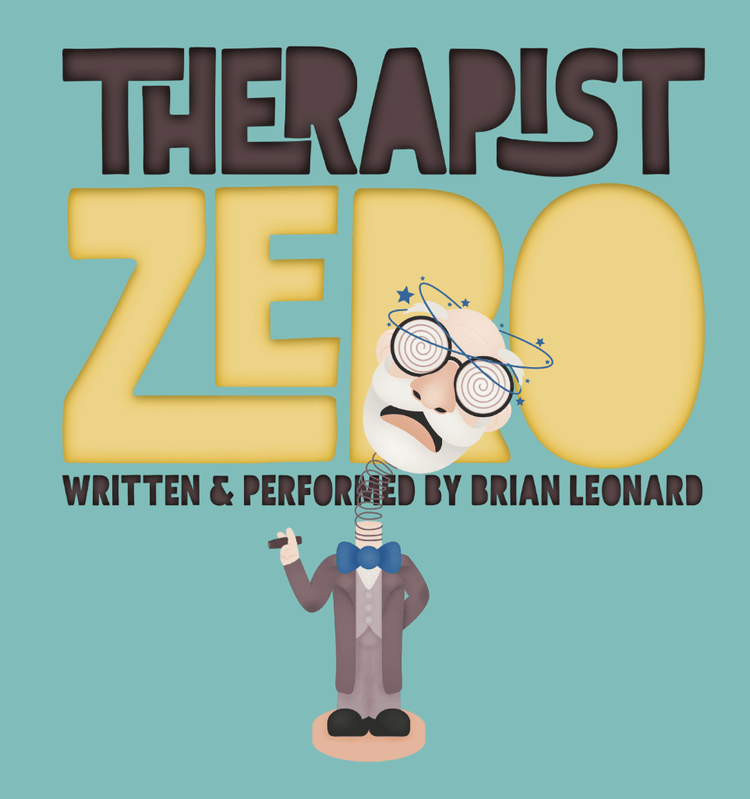
As part of the Minnesota Fringe Festival, the Southern Theater in Minneapolis is currently hosting Brian Leonard’s Therapist Zero, a one-man dark comedy show described as centering on “broken parents, failed therapists, and the art of getting it right.”
In Therapist Zero, Leonard tells the story of his “brilliant but emotionally volatile” daughter Emily—who helped her father develop the show—and the 28 therapists she’s seen throughout her life, starting in elementary school. The history of Emily and her therapists is intercut with the struggles Leonard and his wife had with fertility and scenes of his complicated upbringing as the fifth of six children in an Irish Catholic family in Chicago. One of the primary themes is trying to be a better parent than your own parents were, something most people with children will find relatable. Having so many siblings, Brian Leonard was often forgotten by his parents and sought connection and attention outside the home.
Leonard and his daughter both went to Catholic school, but where he mostly accepted the way things were there, Emily questioned everything, a habit that baffled her teachers, and even Leonard himself at times. Emily’s therapists, similarly, often didn’t know how to support her and could range from decent to self-absorbed to actively emotionally hostile toward the family, with some even implying that she would never be able to improve. This, of course, wasn’t true. With the right support from her care team, she went on to succeed academically and socially.
His humor is often dry, but Leonard is also raw and direct, and the language and concepts here are very accessible. He explained before the show that while the stories he told were deeply personal and sometimes dark, we should feel free to laugh. The stage at the Southern Theater is huge compared to the set dressing he uses to present Therapist Zero: two folding chairs and one swivel stool, small amid a sea of neon spike tape, and a projected slideshow. This places the focus on the performer and his storytelling. The show runs at just under an hour long and is engaging throughout. In some ways it felt too short, but it was clear that Leonard made the show as long as he needed to make it to tell the story he needed to tell.

Courtesy of Brian Leonard
I spoke with Leonard several days before he came to Minneapolis. When I asked what the audience should know going into the show, he described it as “a story about dysfunction and trying to fit in.” He explained that the title is “a nod to when there is a pandemic or epidemic: It always starts with a patient zero. We go back to how this journey of 28 therapists for our daughter started with Therapist Zero.” During the show, Leonard calls that eponymous Therapist Zero, Emily’s first therapist, “Dr. Ripley”—a reference to The Talented Mr. Ripley, the novel turned film and TV series about a narcissist who slowly and methodically takes over a man’s life. Dr. Ripley was not an ideal introduction to the world of child psychology and seemed more interested in selling copies of his book than in helping Emily.
“The most frustrating part of all of this is that we never got a diagnosis, even after many psychologists [and] psychiatrists,” Leonard said. “When she was 13, [Emily] wanted a copy of the DSM-III. For her birthday, she wants a psychiatrist’s label.” While Therapist Zero is told from the father’s perspective and focuses largely on his experiences, this particular anecdote highlights Emily’s point of view.
I asked Leonard what he would change if he had the power to change one thing about the culture of mental healthcare. Despite the benefits having an accurate diagnosis would bring, he expressed frustration at diagnoses being prioritized over improvements to the symptoms Emily presented. “There is a tendency of black and white,” he said. “‘Your child is twice-exceptional, so everything else is on the table.’ ‘Your child has ADHD with epilepsy.’ There was no gray area. Psychiatrists would throw their hands up and say, ‘We don’t know. The problem is not the symptoms, it’s that we don’t know what to call it.’” He added that in his experience, mental health diagnoses are often a “coat” for getting insurance to cover certain expenses, which highlights a flawed medical system that values capital over patient welfare.

Courtesy of Brian Leonard
I can personally relate a lot to Emily—I have been on my own mental health and neurodivergence journey. My mom, who came with me to the show, found she could relate a lot to Leonard as a parent of someone with social and emotional differences. And my family is definitely not alone. After the show, I saw two audience members tell Leonard, “We have kids just like that too.” In the end, Therapist Zero is optimistic, showing that even people who don’t fit into neat diagnostic boxes can find the support they need to thrive. Even in an era in which mental healthcare is more normalized than it’s ever been, that still means a lot to the individuals and families whose daily reality reflects what Leonard describes.
Therapist Zero runs at the Southern Theater through August 15, 2026. It is recommended for adults. You can find out more about the show at TherapistZero.com and book tickets on the Minnesota Fringe website.
Follow @TwinCitiesGeeks on Twitter or Like Twin Cities Geek on Facebook for more great stuff from Minnesota geeks in your feed!
About the Author

Maddie Heath
Maddie is a writer and artist living in Minneapolis. She works as a substitute teacher, volunteers at the Quatrefoil Library, and is on a mission to write the perfect 1,000-word essay.


