
“Onslaught” Is Heavy-Metal Violence with Unfinished Business
If you told me Adam Wingard pitched Onslaught by slamming a stack of John Carpenter VHS tapes and a Terminator poster onto a producer’s desk, I would believe you. The film hits the ground running with a propulsive synth score and tactile sound design that signal its intentions from the first frame. This isn’t Quentin Tarantino and Robert Rodriguez high-fiving over a polished, self-aware homage—Wingard skips the wink-at-the-camera pastiche entirely and goes straight for the throat, mash-up style. He takes the claustrophobic “we’re trapped in here and everyone wants us dead” panic of Assault on Precinct 13 and straps it to the relentless metal-stomp dread of James Cameron’s killer-cyborg classic.
Richard Foreman/Courtesy of A24
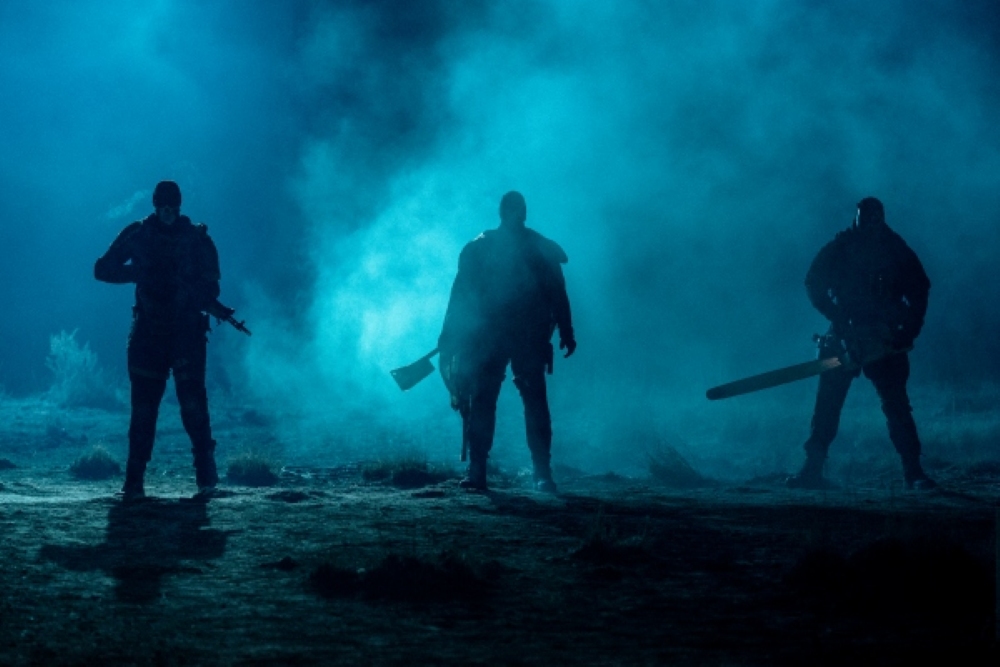
Onslaught stands at the absolute pinnacle of modern ’80s throwback cinema. Seeing genre favorites like Reginald VelJohnson and Michael Biehn on screen connects the film directly to classic action of that era, but Adria Arjona grounds the narrative in a way that feels fresh. As Celeste, she is far from the stoic, hyperefficient killing machines that dominate post–John Wick action movies. She is a beer-drinking, gun-hoarding wreck who feels thoroughly, messily human. And she is here to protect her daughter from three lethal invaders—super-soldiers who have escaped from a secret government facility.
On paper, that premise is minimalist, but the story carries a heavy political edge. Wingard offers a sharp, cynical view of American militarism and state-sanctioned violence—the film kicks off with a title sequence that feels like pure antiestablishment rebellion, cutting together archival footage from decades of US conflict. When the captive super-soldiers appear on screen, their restraints evoke the dark imagery of real-world military torture sites like Abu Ghraib. The story reveals that scientists bioengineered these mercenaries specifically because ordinary soldiers possess too much empathy to unleash violence against their fellow citizens. Once the rogue trio break loose, the film devolves into a relentless cat-and-mouse chase through the New Mexican desert. Wingard anchors these heavy themes with expertly executed crowd-pleasing gore that delivers maximum impact for genre fans without ever devolving into mindless shock value.

Adria Arjona as Celeste. Richard Foreman/Courtesy of A24
Visually, the film delights! Wingard and cinematographer Oren Soffer deliver some great framing paired with razor-sharp editing that keeps the momentum tight. Having lived in the Southwest, I have a deep appreciation for those rare moments when the desert turns cold, and the film captures that sensory atmosphere brilliantly. I loved the meticulous attention to detail in the lighting and environmental textures, particularly seeing the steam of the Butcher’s (Alex Pereira) breath roll off his back and dissipate into the pitch-black desert night. It grounds the monstrous threat in a tangible reality.
It is precisely those patient, retro sensibilities that make the film demand a very targeted viewer. It functions as a hyperspecific homage, and some creative choices might alienate casual filmgoers who aren’t already tuned into that frequency. For instance, the script nonchalantly identifies a character as a “third-generation Paperclip.” Rather than simple military shorthand, this is a direct reference to Operation Paperclip, the post–World War II intelligence program that secretly brought German scientists to the United States. Wingard drops this historical conspiracy lore into casual dialogue with zero exposition, assuming his audience will instantly spot the reference and appreciate the dark history behind it.

Drew Starkey as Cyrus. Richard Foreman/Courtesy of A24
I’m a die-hard fan of Wingard’s 2014 film The Guest, so the director returning to this specific brand of military-industrial chaos was an absolute highlight. Onslaught operates almost as a thematic sibling to that film, expanding on its critique of shadowy defense contractors and government experimentation—it shares the same electronic kinetic energy, sleek antagonist framing, and dark humor. Where Onslaught diverges, however, Wingard shifts the scope and focus. While The Guest relies heavily on a slow-burn, character-driven mystery centered on a single hypnotic lead, Onslaught trades intimacy for chaotic scale, throwing us into an ensemble survival scenario where the momentum never halts.
That connection brings me to Dan Stevens, playing Dr. Hans Kammler, who has fully cemented his status as my favorite weirdo character actor. I love my little freak (complimentary) and the sheer unhinged energy he brings to genre cinema. Nobody plays a weirdo quite like Stevens, and putting him back in a Wingard movie is an automatic win. Instead of the smooth, lethal charmer he gave us in The Guest, Kammler is a totally different character—cold, eccentric, and clearly having the time of his life being strange.

Dan Stevens as Dr. Hans Kammler. Richard Foreman/Courtesy of A24
And not only Kammler but all of the various antagonists steal the show. The three rogue super-soldiers are genuinely terrifying on screen; their mirror-shine glowing eyes, sheer physical scale, and heavy audio cues make every step feel lethal and powerful. Outstanding supporting work by Drew Starkey as Cyrus and Rebecca Hall as Frau Kammler grounds the chaos and gives the organization real teeth. Still, I caught myself wishing the script leaned harder into the soldiers’ namesakes. Even if it flirted with being cheesy, I wanted characters like Roach and Crybaby to reflect their bizarre titles directly through how they fought and behaved.
The only real issue with Onslaught is that it ultimately functions as a massive tease. Wingard builds directly on the dark mythos I loved in The Guest, but the lean structure leaves far too much rich story on the table. The on-screen countdown clock feels redundant, and I spent most of the run time wishing we’d get more of Stevens playing off the brilliant Hall (they share a great intro scene involving their sub/dom relationship). Dangling such compelling character dynamics and conspiracy crumbs without payoff makes the ending feel less like a true resolution and more like a setup for a longer story we never got to see. It’s a blast to watch, but it cuts to black right when the world feels ready to expand.
Follow @TwinCitiesGeeks on Twitter or Like Twin Cities Geek on Facebook for more great stuff from Minnesota geeks in your feed!
About the Author

Victoria Breshears
Victoria is a film writer with a deep love for horror and intense, atmospheric cinema. She applies an analytical lens to film critique, enjoys gaming with friends, and loves traveling (only two continents left!). She lives with her spouse, three cats, and a growing film collection.


