
Being Autistic, Seeing Myself Represented in Media Is Not Always a Good Thing

Gerd Altman via Pixabay
If you spend time in certain geeky communities—especially those that aren’t primarily white, male, cisgender, heterosexual, nondisabled, neurotypical, etc.—you’ve probably heard discussions about representation in media. A lot of us simply don’t see ourselves reflected in the books we read, the shows we watch, or the games we play, and that can have a variety of effects.
We may feel invisible. We may lack role models who show us how we, with our particular obstacles and assets, can live full lives, succeed, or be the hero of anyone’s story. We may notice that our more privileged peers have an easier time seeing themselves as the heroes rather than recognizing our capacity to play that role. There’s even research that links the overrepresentation of men among those suffering from heart attacks on TV to women in real life not recognizing the signs of their own heart attacks, and to doctors not being as informed about how to treat heart disease in women. This is just one example of how a lack of representation can have negative repercussions beyond simply making people sad. A lot of us believe we need more representation of many demographic groups and many types of experiences.
Many of us also believe, however, that bad representation can be worse than no representation. Representation that’s full of stereotypes can set back understanding rather than advancing it. As an autistic person, one of the ways I see this come up is in stories that have characters who read as autistic, and the in-story reason that’s given for their autistic traits is that they’re not fully human. I have a complicated relationship with these characters because, on the one hand, they remind me of myself! In a media landscape with so few characters who are intended and confirmed to be autistic, reading a character who reminds me of myself is a rare and precious experience. On the other hand, being autistic in an ableist society means constantly having my humanity undermined, and I don’t enjoy it when media that I otherwise like contributes to this experience.
My first intense experience of this came with reading Sarah Rees Brennan’s The Demon’s Lexicon trilogy. (Some spoilers in this and the next paragraph for those who haven’t read it.) The protagonist of the first book, Nick Ryves, struggles with speech or using words at times, he doesn’t like being touched, he struggles with social interactions, and he doesn’t have intermediate emotions—he goes from calm to furious without intervening steps like frustration or annoyance. There’s one particular scene that’s stuck with me since I read the books for the first time: Nick’s brother, Alan, is being hurt in a terrible way, and Nick pounds on the floor and counts the seconds. It reminded me viscerally of my reaction to my mother having cancer. I don’t have a lot of interests or habits in common with Nick, but I resonated intensely with the way he processes the world and the problems he has in trying to interact with people and figure out what he should be doing. And then, at the end of the book, it’s revealed that Nick is the way he is because he’s a demon who’s stuck in a human body.
Rees Brennan has addressed the charge that Nick reads as neurodivergent, and that the demon reveal is therefore damaging, in nested comments on a blog post about the book. She claims she didn’t mean for Nick to come across as having any particular form of neurodivergence, and I believe her on that front. But that doesn’t counteract the fact that it is, to put it mildly, not fun to find out that a character whose experience puts words to things you’ve never had words put to before only shares these traits with you by dint of not being human. Complicating my response to the books is that I read them years before I got my autism diagnosis or knew much about autism, so I had years of loving them for their pacing and banter before realizing the representation issues. I don’t love the books anymore, but I don’t want to retcon myself into believing that I never did or that there’s nothing good about them.
I encountered something similar, though possibly less egregious, more recently with Martha Wells’s Murderbot Diaries series (one installment of which another Twin Cities Geek contributor reviewed last year). The protagonist this time is a part-human, part-robot construct that calls itself Murderbot (and, yes, it uses “it” pronouns). Murderbot is deeply relatable to me as an autistic person: it doesn’t like being touched, it has trouble making eye contact, it’s logical, it’s more comfortable around people for whom it doesn’t need to put on an act, and it has a favorite piece of media that it consumes over and over and over.
I don’t love that I relate so much to something that is, on some level, a killing machine. I take some comfort in the fact that Murderbot itself doesn’t enjoy being a killing machine; it doesn’t have many qualms about killing entities that are trying to kill its friends, but it feels deep remorse over the time it was infected with malware and forced to go on a rampage, even though it had no choice in the matter. Ultimately, I have fewer reservations about relating to Murderbot than I have about relating to Nick Ryves because I knew going in that Murderbot wasn’t fully human; that fact wasn’t treated as a dramatic reveal.
Neurodivergent-seeming characters who aren’t fully human have been around for a while—just look at Spock, who has one human parent and one Vulcan parent. I’m not a Trekkie, but I’ve spent enough time in geeky spaces to see a few episodes of Star Trek and overhear a few discussions about Spock’s experience mirroring the experience of being neurodivergent. He’s logical and deals with emotions differently than the people around him, and that can make it hard for him to fit in. I don’t resent Star Trek for maybe coding Spock as neurodivergent, consciously or not, largely because I know the original series was groundbreaking in its time for its representation on a whole bunch of fronts, and also because I haven’t seen enough Star Trek to really judge how Spock was handled.
In the end, though, I think the best answer to the representation question is to have more representation by authors from the communities that need more and better representation. While We Need Diverse Books, which champions diversity in publishing on all fronts, is no longer using the term #OwnVoices—in part because some authors have been forced to reveal things about themselves in response to accusations of writing bad or appropriative representation—there’s still something to be said for reading characters of color, or queer characters, or disabled characters, by authors who share those identities. (I’m not trying to charge that We Need Diverse Books no longer believes this. The organization definitely still believes it! But it bears saying in this article as well.) Of course, revealing that you have a disability can unfortunately have negative consequences, and authors should get to weigh whether to take that risk, rather than having the choice forced on them by the Twittersphere or BookTok.
That said, it’s exciting to get to read autistic characters who are written that way on purpose by people who know what they’re talking about. My only experience thus far with an autistic author writing an autistic character has been Lukas Rivers in ZR Ellor’s May the Best Man Win (which I reviewed here). Given what an utterly transcendent experience that was, I look forward to reading more books by autistic authors. One day, I’d love to write one myself.
Follow @TwinCitiesGeeks on Twitter or Like Twin Cities Geek on Facebook for more great stuff from Minnesota geeks in your feed!
About the Author
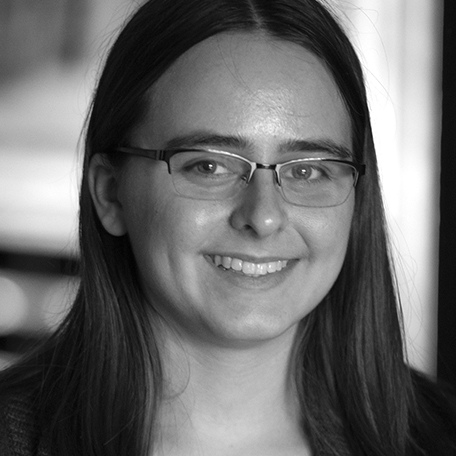
Linnea Peterson
Linnea is a communications professional and aspiring novelist living in Minneapolis. They graduated from Luther College in Decorah, Iowa, where they studied economics, writing, and math. They love musicals, the Swedish language, and fanfiction.


