
Minnesota’s Nokomis Energy Hopes to Expand Community Solar across the State
According to a recent statement, the US Department of Energy (DOE) has set an ambitious new goal regarding expanding clean energy use across the country. Clean (renewable) energy includes energy sources that come from naturally occurring and constantly replenishing processes such as wind, solar, geothermal, water, nuclear, and bioenergy. The DOE’s goal is to see upward of 5 million households powered by community solar systems by 2025 and create $1 billion in energy bill savings. This aims to serve as a stepping-stone for the Biden-Harris administration’s goals of achieving 100 percent clean electricity by 2035.
But what exactly are community solar systems? And how will they help us along the path to kicking our dependence on fossil fuels?
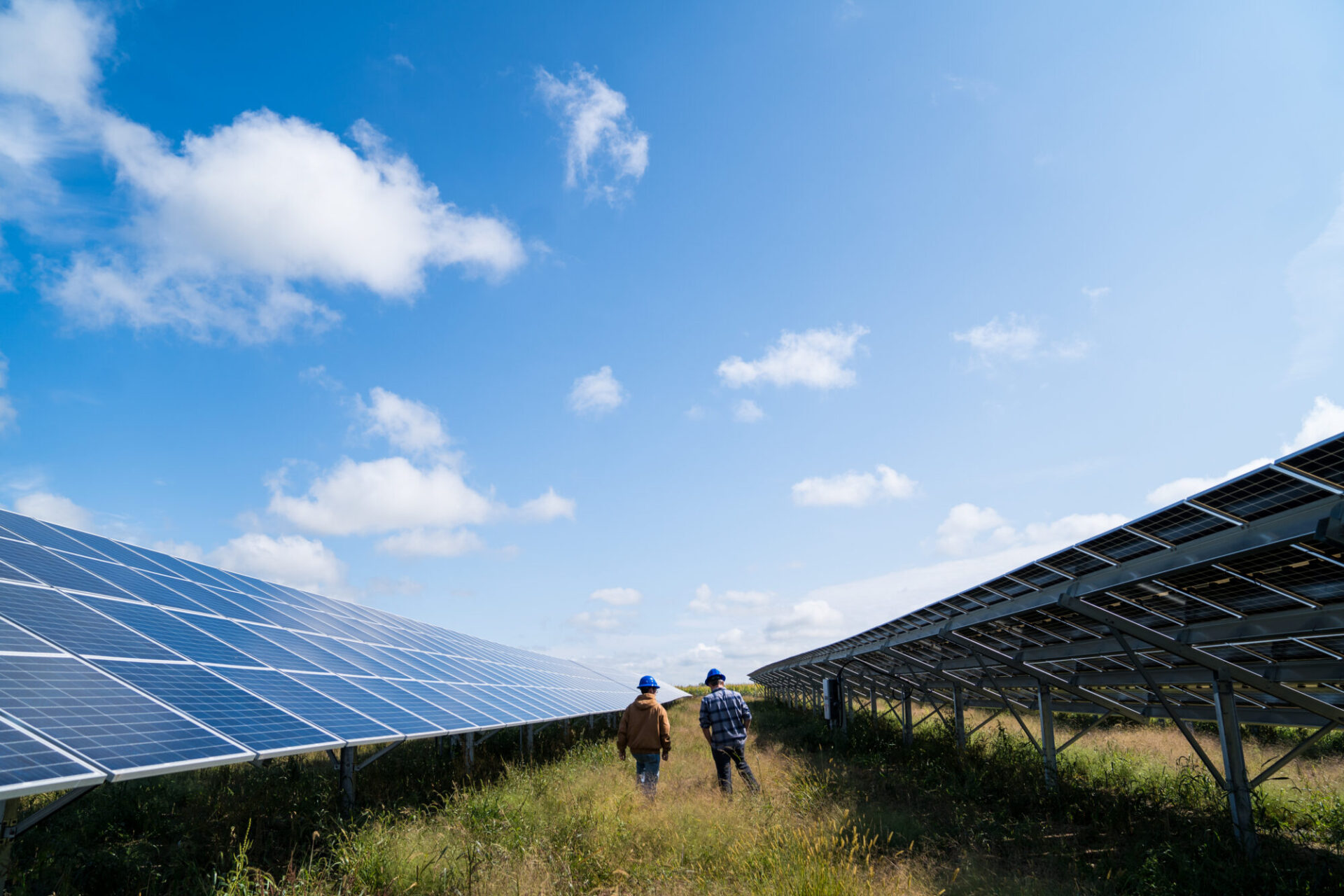
Nokomis Energy cofounder Julian White (right) and Green Isle, Minnesota, farmer Nathan Dahlke (left) at a community solar garden the company developed on Dahlke’s property. Nokomis Energy
According to the DOE, community solar is defined as “any solar project or purchasing program, within a geographic area, in which the benefits of a solar project flow to multiple customers such as individuals, businesses, nonprofits, and other groups.” Effectively, it’s a system in which groups within a set area get their power from the same solar umbrella, usually stemming from a cluster of solar panels at an off-site array. It’s a way to provide solar power to homes and businesses regardless of their individual ability to physically accommodate solar panels.
Given this lofty goal set forth by the federal government, what role can we play here in Minnesota?
Currently, Minnesota has a strong foundation of community solar programs throughout the state—one of the largest networks in the country. One of the organizations working to strengthen this foundation is Nokomis Energy, a clean energy developer founded in 2017 and headquartered right here in Minneapolis.
Joe Stofega, a partner at Nokomis Energy, pointed out to Twin Cities Geek just how beneficial this clean energy transition is for creating opportunities for communities, businesses, and individuals to improve many facets of our society. Over half of the states in the US don’t yet have policies that support community solar programs, and achieving goals like the one set forth by the DOE is going to take all of us working together.
“Clean energy can help drive our state economy,” Stofega explained. “As of last year, there were more than 55,000 thousand clean energy jobs in Minnesota. One-third of those were located in greater Minnesota. Transitioning from a centralized fuel-based electricity generation system to a distributed model will help create opportunities in local communities. Local site designers and electricians who otherwise would have worked on large, centralized projects will be able to work on projects in their own communities.”
According to Stofega, given all of this, we are still in the early stages of transitioning our energy sources and habits. He foresees solar energy growing in popularity and usage here in Minnesota, helping our state grow more and more energy independent as we move forward.
“You’re going to see battery storage become more commonplace,” he said. “This allows solar energy to be stored and distributed when needed. In Minnesota, this could help support the grid during the summer months on those very hot days. Electric vehicles are also becoming more common on Minnesota roads, but we’re going to need more places to charge these vehicles. Because solar is easily deployable, I think we’re going to see solar energy, storage, and [electric vehicles] come together in more ways.”
As it stands right now, 29 percent of all electricity generated in our state is from renewable sources, and 84 percent of all new electricity generation capacity added since 2010 has been renewable energy sources, according to data from the Minnesota Energy Fact Sheet. And with these renewable sources comes decreased air, land, and water pollution as well as greenhouse gasses—all of which is net positive for our world. But despite this, conversations around renewable energy—particularly solar power—inevitably circle back to the construction and maintenance of these technologies. Are these processes also sustainable?
According to the US Energy Information Administration, the photovoltaic cells that are used in solar panels to convert sunlight to energy do contain some toxic materials and chemicals. If these materials were to leak, it could be harmful to the environment. Further, these materials and chemicals make the disposal or recycling of these panels difficult. However, as states increase the use and installation of such solar panels, legislators have begun regulating the disposal processes and energy companies have increased their efforts to develop recycling programs for damaged or used cells.
On this topic, Stofega remains optimistic about the work that’s been done and the innovation that’s yet to come.
“Solar technology is advancing rapidly and costs are dropping significantly,” he stated. “As adoption becomes more widespread, I think we’re going to see a continued focus on producing panels in a way that creates the least amount of waste at the end of their long life cycle.”
You can find more about Nokomis Energy’s efforts to expand solar energy in Minnesota on the company’s website.
Follow @TwinCitiesGeeks on Twitter or Like Twin Cities Geek on Facebook for more great stuff from Minnesota geeks in your feed!
About the Author

Joe Praska
Joe is an elementary-school teacher in Minneapolis with a particular excitement for teaching science. He began to dabble in writing and blogging in 2013 and has spiraled further and further down the rabbit hole ever since.


